Welcome to Hubei Magicleaf Technology Co., Ltd.
Mobile: +8618566295225
E-mail: tina@magicleafbags.com

Mobile: +8618566295225
E-mail: tina@magicleafbags.com
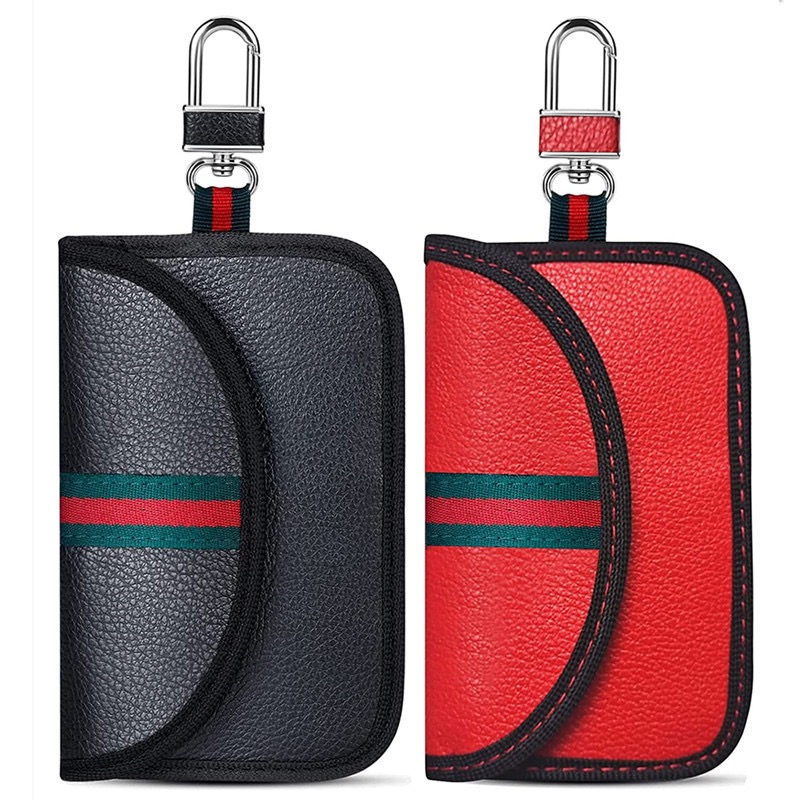
A car key Faraday pouch and a Faraday box are both designed to store compatible key fobs in a closed shielding enclosure. However, they are built for different storage habits, locations and product requirements.
A pouch is usually selected for portable daily carry, travel and compact retail accessories. A box is generally better suited to fixed storage at home, in an office, at a reception desk or in a showroom. The right choice depends on how many key fobs need to be stored, where the product will be used and how consistently users can close the shielding enclosure.
This guide compares pouch and box formats by portability, capacity, closure workflow, branding opportunities and OEM sourcing considerations.
| Comparison Point | Car Key Faraday Pouch | Car Key Faraday Box |
|---|---|---|
| Typical Storage Location | Travel, daily carry, vehicle use or portable storage | Home, office, reception desk, showroom or fixed storage point |
| Product Structure | Flexible or semi-flexible pouch format | Rigid or semi-rigid storage box format |
| Typical Capacity | One compatible key fob or a limited number of compact items | One or more key fobs, depending on internal dimensions and layout |
| Daily Handling | Put key fob inside, close pouch and carry it as needed | Place key fob in a fixed location, close the lid and retrieve it when needed |
| Primary Buyer Focus | Size, fit, closure, material, portability, logo and packing | Capacity, box structure, outer finish, interior layout, lid closure and presentation |
| Suitable Product Programs | Automotive accessories, travel products, private-label retail and promotional items | Home-security accessories, office storage, premium gifts and showroom products |
| Testing Focus | Key fob fit, complete pouch closure and portable-use workflow | Lid closure, internal key placement and multi-key storage workflow |
The first selection question is not which product looks better. It is where and how the user will store the car key fob when normal wireless communication is not required.
A portable pouch and a fixed storage box can serve related purposes, but their user behavior is different. A pouch is usually carried with the user. A box usually remains in one location and becomes part of a home, workplace or vehicle-key management routine.
A pouch can be a practical choice when users need compact storage for a compatible car key fob during travel, commuting, daily carry or temporary storage. The flexible format can fit into a bag, pocket, drawer or travel kit, depending on the selected dimensions and materials.
For a pouch project, buyers should focus on the real dimensions of the target key fob, including any protective shell, key ring or attached accessory. The key fob should fit inside the intended shielding compartment while allowing the closure to engage fully.
For a compact private-label format, see Magicleaf’s portable key fob pouch for OEM projects. The standard pouch format is designed around compact daily carry, with customization options for material, color, logo and packing.
A Faraday box may be better for users who want a dedicated storage location near an entryway, office desk, reception counter, showroom display area or bedside table. The box format can provide a more visible and structured storage habit, especially when a household, office or team needs to keep keys in a consistent place.
Boxes may also be preferred when multiple key fobs must be stored together. However, capacity should always be confirmed using the actual key fob sizes and the desired internal arrangement. A box that holds several small fobs may not be suitable for several large fobs with cases or key rings.
For a fixed-storage product direction, review Magicleaf’s Faraday box for car key storage.
Portability and capacity usually create the biggest difference between pouch and box formats. A compact pouch is easy to carry but usually has limited space. A box can provide more internal capacity and a stable storage location, but it is not intended to be carried in the same way.
A typical pouch workflow is simple: the user places a compatible key fob inside, fully closes the shielding section and carries or stores the pouch. This format can work well for users who travel, use several bags, keep a key fob in a vehicle or want a compact accessory for daily routines.
The most important user requirement is consistent closure. If the key fob is too large, if a key ring interferes with the flap or zipper, or if users do not close the pouch fully, the intended enclosed storage condition may not be achieved.
A typical box workflow is based on a regular storage location. The user returns home, arrives at an office or finishes a work shift, places the key fob inside the box and closes the lid. The product becomes part of a repeatable routine rather than an item carried throughout the day.
This format can be useful for households with more than one driver, offices managing vehicle keys, dealerships, rental fleets or corporate programs. Buyers should confirm not only the box capacity, but also the way multiple users will open, close and return keys to the box.
A Faraday-style storage product should be evaluated as a closed enclosure. Whether the product is a flexible pouch or a structured box, the closure method affects how users interact with the product and how buyers should test it.
Pouch projects may use a flap, zipper, hook-and-loop closure or other structure depending on the product design. Buyers should evaluate whether the selected closure is easy to use repeatedly and whether it remains fully closed when a real key fob, key ring and protective cover are stored inside.
For a troubleshooting guide focused on pouch fit and closure, read why a key fob may still work inside a Faraday pouch.
Box projects usually involve a lid, magnetic-style closure, snap closure or another structured closing mechanism. Buyers should inspect lid alignment, edge coverage, repeated opening and closing, and the position of key fobs inside the storage area.
A key fob should not prevent the lid from closing completely. For multi-key storage, buyers should also test whether several key fobs can be placed inside without causing uneven closure or crowding near the lid edge.
The right format changes according to the target customer, sales channel and product purpose. The following examples show how different buyers may approach the selection process.
An automotive accessory brand may choose a compact pouch when developing a lightweight add-on product for online retail, dealership accessories or travel-oriented collections. A pouch can offer a broad area for logo treatment and can be packaged as a compact private-label item.
A premium accessory line may also include a box for home storage. In that case, the pouch and box can serve different use scenarios rather than compete with each other.
Private-label retailers should start with the target retail price range, package size, product weight, intended customer and brand positioning. A pouch can fit a lower-volume, compact shelf or e-commerce format. A box can support a more presentation-focused product with a structured appearance.
Both options should be sampled with the key fob types expected in the target market before final packaging or artwork is approved.
Corporate buyers may prefer a box for a fixed office location, a reception desk or a shared key-management area. The decision should consider the number of users, the number of key fobs, the expected storage routine and whether the product will remain in one location.
If employees or drivers need to carry the product between locations, a pouch may be the more practical format.
A pouch and a box require different project details during OEM development. Both begin with the same basics: target quantity, intended key fob dimensions, destination market, logo artwork and packaging needs. After that, each format has its own construction and usability requirements.
| OEM Requirement | What to Define for a Pouch | What to Define for a Box |
|---|---|---|
| Target Key Fob | Length, width, thickness, case and attached key ring | Number of fobs, dimensions of each fob and preferred internal arrangement |
| Structure | Pouch dimensions, flap or zipper direction, interior compartment and carrying features | Box dimensions, lid style, internal divider, hinge or closure design |
| Exterior Material | PU, polyester, fabric or buyer-specified material direction | PU leather, fabric, structured exterior or buyer-specified finish |
| Branding | Printed logo, embossed logo, label, patch or other suitable method | Logo position on lid, exterior finish, internal branding and premium presentation options |
| Packing | OPP bag, retail card, gift pouch, custom box or e-commerce packing | Retail carton, gift box, instruction card, barcode label and shipping carton marks |
| Sample Review | Fit, closure, logo position, portable handling and buyer-defined key fob test | Capacity, lid alignment, interior layout, exterior finish and buyer-defined key fob test |
Step 1: Does the user need to carry the key fob during travel, commuting or daily movement?
Yes: Start with a compact pouch format and confirm key fob fit, closure method and carrying convenience.
No: Continue to Step 2.
Step 2: Does the user need a dedicated home, office, reception or showroom storage location?
Yes: Consider a Faraday box with the appropriate capacity, exterior finish and lid closure.
No: Continue to Step 3.
Step 3: Does the product need to store multiple key fobs at the same time?
Yes: Evaluate a structured box format and test the internal layout with representative key fobs.
No: A compact pouch may be the more practical starting point, provided the key fob can fit and the pouch can close fully.
A private-label automotive accessory brand wants to offer products for both everyday users and premium home-storage buyers. Instead of choosing only one format, the brand creates a two-part product line.
The first product is a compact pouch for users who need portable key fob storage during travel or daily carry. The second product is a structured box for customers who prefer to keep keys in a fixed location at home or in an office.
Before production, the buyer defines the representative key fob dimensions, preferred materials, brand colors, logo position, packaging direction and buyer-defined test process for each product format. The two products share a consistent visual identity while serving different storage routines.
Neither format is automatically better. A pouch is generally more suitable for portable daily carry, while a box is more suitable for home, office or other fixed storage locations. The right choice depends on the user workflow, required capacity and key fob dimensions.
It depends on the pouch dimensions, key fob size, thickness and closure design. Buyers should test the actual fobs together inside the pouch and confirm that the shielding compartment can close completely.
Yes, depending on the internal dimensions and layout. Buyers should test the target number of key fobs inside the box and confirm that the lid closes correctly without crowding the closure area.
Buyers should test key fob fit, closure operation, the relevant vehicle functions, exterior material, logo position, packaging and any buyer-defined inspection requirements. The test should use representative vehicle and key fob models.
Yes. A private-label brand can use shared colors, logos, packaging elements and product naming across pouch and box formats while adapting materials and structure to each product’s use scenario.
A portable pouch and a fixed Faraday box can complement each other in an automotive accessory range. Start by identifying how and where users will store their key fobs, then confirm fit, closure workflow, capacity and product presentation through a physical sample.
For portable key fob storage, explore Magicleaf’s signal blocking bag for car key fobs. For fixed home, office or showroom storage, review the Faraday car key box options.