Welcome to Hubei Magicleaf Technology Co., Ltd.
Mobile: +8618566295225
E-mail: tina@magicleafbags.com

Mobile: +8618566295225
E-mail: tina@magicleafbags.com
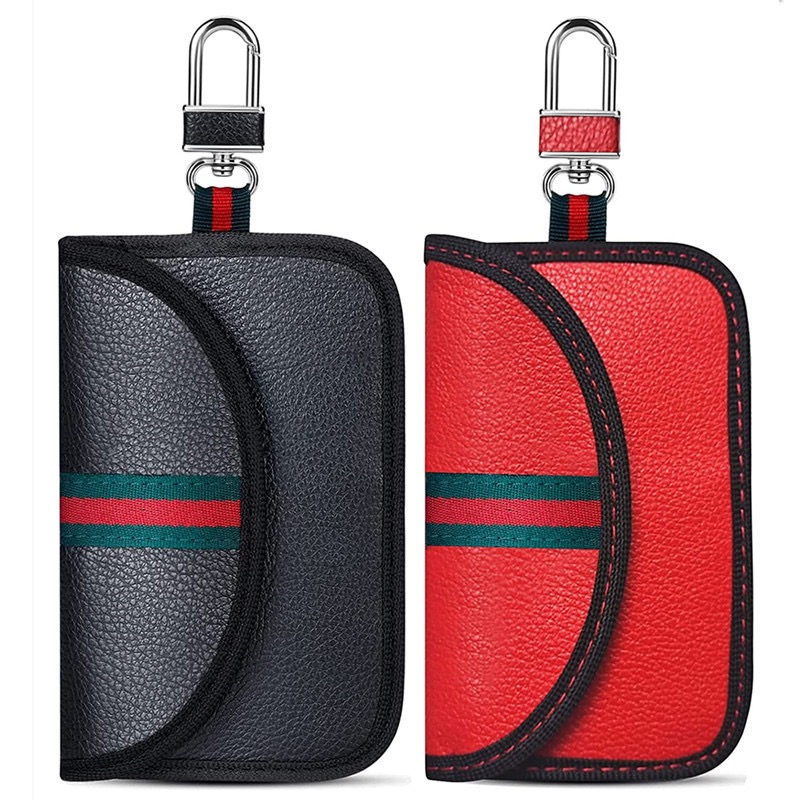 A car key fob may still unlock a vehicle or trigger keyless entry while inside a Faraday pouch for several practical reasons. In most cases, the issue is related to incomplete closure, poor key fob fit, pouch wear, inconsistent testing conditions, or differences between vehicle key systems.
A Faraday-style pouch should always be evaluated with the actual vehicle and key fob it is intended to support. A result from one vehicle, one key fob model or one parking location does not automatically apply to every vehicle or daily-use situation.
This guide explains how to test a key fob pouch correctly, identify common problems and decide when the pouch size, closure or construction should be reviewed.
Before deciding that a Faraday pouch is not working, create a simple and repeatable test. A car key fob may control remote lock and unlock functions, passive keyless entry, trunk release or vehicle start authorization. These functions can behave differently, so they should be tested separately when relevant.
Use the same vehicle, the same key fob and the same test location each time. This makes it easier to determine whether the result is caused by the pouch, the closure, the vehicle system or local signal conditions.
Confirm that the key fob works normally before placing it inside the pouch. Stand at a consistent distance from the vehicle and test the function you want to evaluate, such as locking, unlocking or passive entry.
If the key fob battery is weak, if the vehicle does not respond consistently or if the test environment changes between attempts, the pouch test may not provide a useful comparison.
Put the full key fob inside the intended shielding compartment. If the key fob is attached to a key ring, protective case, remote accessory or other item, test the configuration that users will actually carry every day.
The key fob should not sit at the edge of the pouch or prevent the closure from engaging fully.
Secure the pouch exactly as designed before testing. A flap should overlap correctly, a zipper should be fully closed, and any hook-and-loop or similar closure should be pressed together completely.
A shielding pouch is intended to function as a closed enclosure. If the closure remains partly open, if the key fob pushes against the edge or if the pouch is not folded correctly, the test may not reflect normal intended use.
With the pouch fully closed, return to the same test position and try the same vehicle function again. Then remove the key fob from the pouch and repeat the normal test.
This sequence helps show whether the change in result is related to the pouch rather than a weak key fob battery, vehicle issue or unrelated signal condition.
| Possible Cause | What to Check | How to Test | Recommended Action |
|---|---|---|---|
| Pouch is not fully closed | Check the flap, zipper, hook-and-loop area or other closure system. | Close the pouch again and make sure no part of the key fob sits near the open edge. | Repeat the test only after the shielding compartment is completely closed. |
| Key fob is too large or too thick | Check whether the key fob, protective cover or key ring prevents complete closure. | Test the key fob alone, then compare the result with the full everyday-carry setup. | Review a larger pouch size or a different closure format if full closure is not possible. |
| Incorrect test method | Check whether the same vehicle function, distance and location were used. | Test outside the pouch, inside a fully closed pouch and outside again. | Create a written test sequence and follow it for every sample evaluation. |
| Seam, fold or material wear | Inspect corners, folds, seams and closure edges for wear or damage. | Compare a used pouch with a new sample under the same conditions. | Replace damaged pouches and include durability checks in the quality-control plan. |
| Vehicle or location differences | Check the vehicle model, key fob type, parking location and nearby electronic environment. | Repeat the test with representative vehicles and fobs in the intended use environment. | Document the tested conditions instead of relying on one result from one location. |
| Different keyless-entry functions | Check whether remote-button functions and passive-entry functions were tested separately. | Record the result for each vehicle function relevant to the project. | Define required functions and acceptance criteria before product approval. |
The most common reason a car key fob still works inside a Faraday pouch is incomplete closure. A pouch may contain shielding material, but its intended performance depends on whether the stored item is fully enclosed.
For example, a flap that is only partly folded down, a zipper that is not fully closed or a hook-and-loop closure with an open edge can change the result of a practical test. The same may happen when a key fob is positioned directly at the closure line.
For a buyer-defined test, record the closure method, whether the pouch was fully closed, the key fob model, the vehicle function tested and the test distance. These details make the test repeatable and help compare one sample configuration with another.
Outside pouch dimensions do not always show the usable internal space. A key fob can be long, thick or irregularly shaped, and many users also carry a key ring, key shell, protective cover or other accessories.
A pouch that looks large enough may still fail to close correctly once the real daily-carry configuration is placed inside. For this reason, fit testing should use the actual key fob setup rather than a basic size estimate.
Measure the key fob length, width and thickness. Include the attached key ring, key shell or case if users are expected to store them together. The purpose is not only to confirm that the fob enters the pouch, but also to make sure the closure can engage without strain.
A thick key fob can create pressure near the closure line. This may affect whether a flap overlaps correctly, whether a zipper can close fully or whether the pouch retains its intended enclosed shape.
The most useful sourcing decision is based on a physical sample fitted with the target key fob, not only on an exterior size listing or material description.
Review another pouch size or construction if the key fob cannot fit inside without crowding the closure area, if users need to store multiple fobs together, or if an attached key ring prevents consistent daily closure.
A larger pouch is not always the best solution. The selected size should support practical storage while still allowing the shielding compartment to close fully.
For an OEM-oriented compact pouch format, see Magicleaf’s key fob shielding pouch for custom projects. Buyers should confirm target key fob dimensions and carrying configuration during sample evaluation.
Practical performance depends on more than the shielding fabric itself. The finished pouch construction also matters. Seams, folds, corners, closure edges and frequently bent areas should be inspected, especially for pouches designed for everyday use.
A new pouch and a heavily used pouch may not give the same result if the closure is damaged, if the lining has worn through or if the pouch no longer closes correctly.
If a pouch no longer produces the expected result, compare it with a new sample using the same vehicle, key fob, location and testing method. If the new and used pouches give different results, inspect the used pouch and review how it has been folded, carried and closed during normal use.
Vehicle key systems can include several different functions. A remote lock button may work at one range, while passive keyless entry may use a different detection area around the vehicle. A trunk-release button and vehicle start authorization may also behave differently.
For this reason, one test result should not be treated as a complete conclusion. Identify the function you need to evaluate and repeat the same test under consistent conditions.
For remote-button testing, stand at a consistent distance from the vehicle. Put the key fob inside the fully closed pouch, then try the lock or unlock button. Remove the key fob and confirm that normal remote operation returns.
For passive-entry testing, keep the closed pouch in the position where a user would normally carry it. Approach the vehicle and test the relevant door-handle or proximity function. Then repeat the same test with the key fob outside the pouch.
Vehicle start authorization should be evaluated only according to the vehicle manufacturer’s normal operating procedure and in a safe setting. Results may depend on the location of the pouch, the vehicle’s detection area and the specific key system.
Do not use one vehicle-start result as the only measure of pouch performance. Test the functions that matter for the intended product use.
Car key fobs vary by vehicle manufacturer, model, region, battery condition, radio configuration and normal operating range. Local conditions can also affect a practical test.
For example, a test performed in an open parking area may not give the same result as a test performed inside a garage, near other electronic equipment or at a different distance from the vehicle.
For personal use, test with the actual vehicle and key fob you carry. For retail, distribution or OEM projects, test with representative key fob models from the intended market and document the conditions used for sample approval.
For a private-label project, pouch approval should not rely only on a general fabric description. Buyers should identify the representative key fob models, their dimensions, intended carrying setup and the functions that need to be evaluated.
These details provide a practical basis for sample development, buyer testing and later bulk inspection.
A repeatable test process helps prevent misunderstandings between sample approval and bulk-order expectations. The goal is not to make a universal claim for every vehicle or environment. The goal is to define the exact use case that the buyer expects the approved sample to support.
Step 1: Identify the target vehicle and key fob.
Step 2: Measure the key fob, case and key-ring configuration.
Step 3: Confirm that the pouch can close fully around the complete key fob.
Step 4: Test normal vehicle functions with the key fob outside the pouch.
Step 5: Put the key fob inside, close the pouch fully and repeat the same test.
Step 6: Remove the key fob and confirm that normal operation returns.
Step 7: Record the test conditions and decide whether to approve the sample or revise the pouch size, closure or construction.
For a related fixed-storage test method, read Magicleaf’s guide on how to test a car key box for key fob signal blocking. A box and a flexible pouch have different storage workflows, but both should be tested with the intended key fob and a fully closed enclosure.
A product review may be needed if the key fob cannot fit inside the intended shielding compartment, if the closure cannot be used consistently, if the pouch structure changes during product development or if buyer-defined testing does not meet the agreed project requirements.
For OEM projects, potential changes may include revising pouch dimensions, using a different closure style, adjusting the internal layout, selecting another exterior material or changing the packaging format.
Any structural change should be reviewed through a new sample. A revised design may affect key fob fit, daily handling, closure operation and the buyer’s test results.
A private-label automotive accessory buyer plans a compact key fob pouch for daily carry. Before approving production, the buyer identifies common key fob sizes in the target market, confirms whether key rings will be stored with the fob and defines the vehicle functions that should be evaluated.
During sample review, the buyer checks key fob fit, closure operation, logo position, exterior material and retail packing. The buyer then follows the same test sequence with each representative key fob model.
The approved sample, recorded dimensions and agreed testing method become the reference for production and buyer-defined inspection.
Common causes include incomplete closure, a bulky key fob or key ring that prevents full closure, seam or material wear, and inconsistent testing conditions. Test the same key fob and vehicle outside the pouch, inside a fully closed pouch and outside again for comparison.
Yes. The key fob should be fully placed inside the intended shielding compartment, and the pouch should be closed correctly. A key fob positioned near an open edge may not be tested under the intended use condition.
Yes. A large key ring, key shell or protective cover can reduce usable internal space and interfere with complete closure. Always test the full configuration that users are expected to carry.
They may use different vehicle functions, detection areas and operating conditions. Test each function separately and record the vehicle model, key fob model, location, distance and closure condition.
Retest after visible damage, heavy wear, closure problems or a material change. For OEM projects, buyers should define sample approval and bulk-inspection requirements before production begins.
Provide target quantity, key fob dimensions, representative vehicle or key fob models, preferred material, color, logo artwork, packing requirements, destination market and any buyer-defined testing requirements.
For a car key fob pouch project, begin by confirming the target key fob size and the vehicle functions that need to be evaluated. Then request a sample, test it with representative devices and document the approved configuration before bulk production.
If you need a compact OEM signal blocking bag for car key fobs, review the standard pouch format, material options, customization scope and sample requirements.