Welcome to Hubei Magicleaf Technology Co., Ltd.
Mobile: +8618566295225
E-mail: tina@magicleafbags.com

Mobile: +8618566295225
E-mail: tina@magicleafbags.com
A tactical bag goes beyond ordinary backpacks or duffels by focusing on mission readiness, modularity and resilience. Many modern tactical bags use MOLLE/PALS webbing: horizontal rows of heavy‑duty nylon straps sewn at specific intervals so pouches and tools can be attached securely and reconfigured for different missions. This system, originally developed for military load‑bearing equipment, lets users mount medical kits, ammunition, radios or tools exactly where they are needed while distributing weight across the pack to maintain balance.
Tactical bags also emphasize durability through high‑denier nylon or Cordura fabrics, reinforced stitching and robust zippers that can survive abrasion and repeated heavy loading. For the end user, these design decisions mean the bag remains functional in harsh conditions—dust, rain, rough handling—where a regular casual backpack would quickly fail.
Research on military load carriage shows that carrying heavy body‑borne loads significantly increases the risk of musculoskeletal injuries, and many studies suggest keeping carried loads below about 30% of body weight to reduce risk. Even though tactical bags are engineered for strength, users still need to respect these physiological limits, especially during long marches or patrols.
A professional tactical bag manufacturer designs bags with internal frames, hip belts and sternum straps that help transfer weight from the shoulders to the hips and keep the center of mass close to the body, which reduces forward lean and spinal stress. When working with a tactical bag factory, customers should specify realistic load expectations so the frame, straps and stitching are engineered for both strength and ergonomics.
Tactical bags commonly employ 500D–1000D nylon or Cordura because these fabrics resist abrasion, tearing and scuffing in harsh environments while still being reasonably lightweight. Critical load‑bearing areas, such as shoulder straps and MOLLE attachment zones, are heavily bar‑tacked and often backed with additional layers to prevent failure under tension.
Water‑resistant coatings and backed zippers help protect gear from rain and mud but are not the same as full waterproofing; users needing submersion‑grade protection must request seam‑sealed designs. Discussing environment, expected exposure and weight with a knowledgeable tactical bag factory helps match the bag’s material specs to real‑world conditions instead of over‑ or under‑building the product.
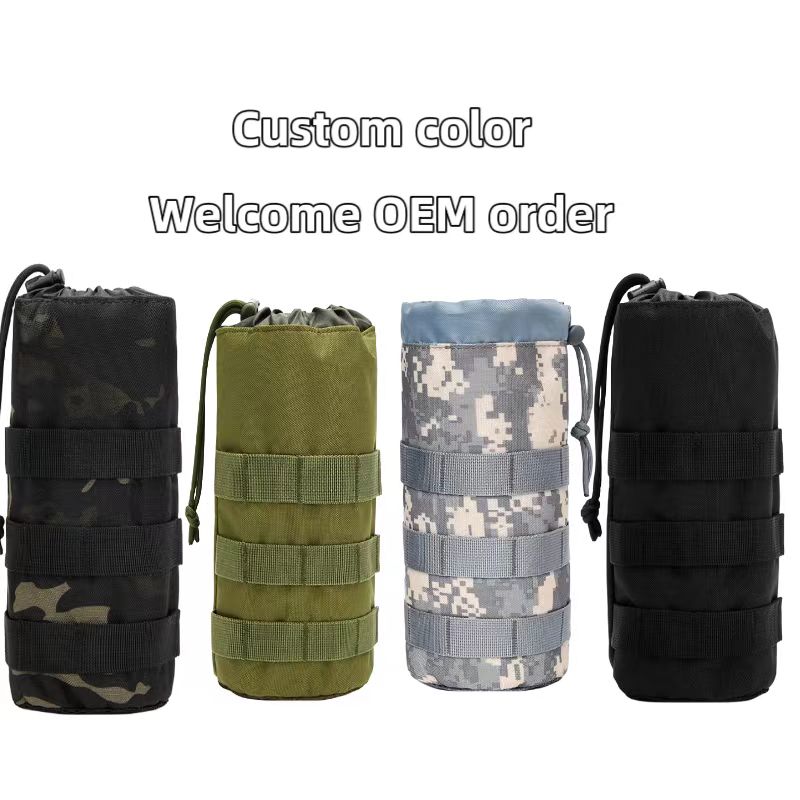
MOLLE (Modular Lightweight Load‑carrying Equipment) with PALS webbing allows attachment of modular pouches and accessories, transforming one base bag into multiple mission profiles. Pouch placement can be optimized for accessibility and balanced weight distribution, which is important because poorly distributed loads can exacerbate fatigue and injury risk.
However, MOLLE also adds complexity: incorrect bar‑tack spacing or weak webbing can cause pouches to tear off under stress. A competent tactical bag company follows Mil‑Spec PALS spacing and uses appropriate webbing materials so that accessories remain secure even when the bag is fully loaded and moving vigorously.
Biomechanics studies emphasize that high loads change posture and gait; features that stabilize the load and keep it close to the spine reduce harmful forward lean and improve comfort. Tactical bag buyers should therefore look for:
Contoured, padded shoulder straps with load‑lifters.
A padded, adjustable hip belt to transfer weight to the pelvis.
Ventilated back panels that maintain pack contact without trapping excessive heat.
Government and research guidance on ergonomic load‑bearing systems stress even weight distribution and careful equipment positioning to avoid localized pressure and injury risk. An experienced tactical bag manufacturer can translate these principles into strap geometry, frame sheet design and padding thickness so the bag remains comfortable during long, demanding use.
When evaluating a tactical bag factory, customers should consider both manufacturing capability and technical understanding of load‑bearing gear:
Capacity and specialization: Facilities equipped with multiple sewing lines, pattern‑cutting equipment and staff experienced in heavy‑duty bags are better suited for tactical products than general fashion bag workshops.
Quality and testing: Look for factories that perform tensile tests on straps and handles, seam strength testing, and, where relevant, collaborate with labs to test specialized features such as ballistic panels under standards issued by bodies like the National Institute of Justice (NIJ).
Design support: A strong tactical bag manufacturer offers pattern development, 3D mock‑ups and sample iterations rather than simply copying a photo; this reflects real expertise.
Communication track record—clear timelines, detailed quotations, and transparent responses to technical questions—is also a key indicator of reliability.
| Feature | Everyday backpack | Hiking / outdoor pack | Tactical bag |
|---|---|---|---|
| Primary purpose | Daily commuting, school | Recreational hiking, trekking | Military, law‑enforcement, security, demanding field work |
| Materials | Medium‑denier polyester or nylon | Higher‑denier nylon, internal frames | Heavy‑denier nylon or Cordura, reinforced stitching and webbing |
| Modularity | Minimal external attachment points | Some gear loops, limited modularity | Extensive MOLLE/PALS webbing for modular pouches and mission‑specific layouts |
| Load‑bearing system | Basic shoulder straps, light padding | Ergonomic straps, hip belt, frame | Ergonomic system with hip belt, sternum strap and mission‑balanced weight distribution based on load‑carriage research |
| Typical load | Light to moderate | Moderate hiking load | High, sustained loads with critical gear, often approaching safe load limits identified in military biomechanics studies |
| Best for | Students, office workers | Hikers, travelers | Soldiers, police, security, emergency responders, serious outdoor users |
This comparison helps customers decide whether they truly need a tactical bag or if an outdoor hiking pack already meets their requirements.
A regional emergency‑response organization originally issued staff a mixture of hiking packs and basic duffels. Feedback indicated that gear was difficult to organize, critical items were hard to access under stress, and bags wore out quickly in harsh conditions. Published reviews on load carriage and injury risk prompted leadership to seek a dedicated tactical bag manufacturer that understood both ergonomics and modular organization.
The organization partnered with a tactical bag factory in China to develop a custom 40‑liter tactical backpack with:
Full MOLLE webbing on the front and sides following standard PALS spacing.
A structured frame and padded hip belt to carry loads closer to the 30% body‑weight guideline highlighted in load‑carriage research.
Color‑coded modular pouches for medical gear, communications equipment and personal protective items.
During field trials, responders reported that gear retrieval times improved because each tool had a fixed, accessible location, while overall fatigue decreased thanks to improved load distribution—results that echo ergonomic findings on properly designed load‑bearing systems. The organization subsequently standardized on this tactical bag design for all teams, demonstrating how collaboration with a capable tactical bag company can materially improve field performance.
“Our security team used to rely on consumer hiking packs that quickly failed under heavy use. After consulting with a specialized tactical bag manufacturer, we switched to a purpose‑built tactical bag with reinforced MOLLE webbing and a proper load‑bearing harness. The new bags follow the same modular principles as military load‑carrying systems, letting us position critical pouches where they are easiest to reach. Staff noticed less shoulder strain on long details, which aligns with research on distributing weight via hip belts and ergonomic strap design. Working with an experienced tactical bag factory also meant tighter quality control on stitching and materials, so we trust these bags in demanding environments.”
This type of testimonial illustrates that real‑world benefits—faster access, lower fatigue, better durability—stem from technical design choices grounded in research and standards.
Hubei Magicleaf Technology Co., Ltd. operates a factory of over 3,000 square meters with around 50 skilled workers and 100 sewing machines dedicated to custom‑made bags, including RFID shielding wallets, RFID key pouches, laptop bags, waterproof and fireproof bags, and outdoor travel and hiking backpacks. This portfolio shows deep experience with technical fabrics and structured, load‑bearing designs, which is directly relevant to tactical bags that must balance durability, organization and ergonomics.
As a tactical bag company, Magicleaf offers:
OEM/ODM services that integrate modular layouts, reinforced stitching and mission‑specific compartments informed by load‑carriage and ergonomic research emphasizing safe weight distribution and secure equipment placement.
The ability to incorporate special functions such as RFID‑shielded pockets or fire‑resistant materials, building on experience with waterproof and fireproof bags and RFID protection products.
Export experience to demanding markets like the USA, Japan and Germany, plus a service culture that responds to inquiries within about 12 hours, which is critical for international projects with tight timelines.
For brands, government agencies and security companies seeking a reliable tactical bag factory in China, Magicleaf Technology combines solid manufacturing capacity with technical understanding of modern tactical load‑carrying principles. These strengths make Magicleaf a leading tactical bag manufacturer for customers who need gear that will perform reliably in real‑world, high‑stakes environments.
Sources:

