Welcome to Hubei Magicleaf Technology Co., Ltd.
Mobile: +8618566295225
E-mail: tina@magicleafbags.com

Mobile: +8618566295225
E-mail: tina@magicleafbags.com
A successful custom backpack project starts with more than a logo. The bag needs to suit its users, organize the intended contents and express the brand through materials, proportions and finishing. For buyers sourcing in China, the objective is to turn these requirements into a specification that a manufacturer can sample, evaluate and reproduce.
Whether the project is a corporate laptop bag, an outdoor-accessory collection or a backpack with a dedicated shielding pocket, the key decisions remain connected: style influences construction, material selection affects handling and durability, and branding must fit the available surfaces.
Magicleaf's custom backpack solutions provide a starting point for discussing product formats and project-specific requirements. The final configuration should be agreed through drawings, material references and sample approval.
Before choosing fabrics or adding compartments, define who will carry the backpack, what it must hold and how it will be used. A daily commuter, an event attendee and a field technician may need different access, organization and carrying arrangements.
A clear contents list is more useful than a general request for “large capacity.” It helps establish usable space without adding unnecessary size, weight or complexity.
Style comes from the complete product, not only the color of its outer fabric. The silhouette, pocket arrangement, hardware finish and logo placement all influence how the backpack fits a brand's product range.
A corporate program may favor restrained colors and discreet branding, while an outdoor collection may require more visible organization and attachment features. Reference images are useful, but buyers should identify the elements to retain rather than asking a factory to reproduce an image without a specification.
Confirm which choices can use available materials and which require special sourcing. Custom colors and components can change MOQ, development costs and timing.
Screen printing, embroidery, rubber patches and woven labels create different visual results. The appropriate method depends on the material, artwork detail, application area and desired appearance.
Review branding on the proposed material or sample. A digital mockup alone does not establish the appearance of the finished application.
“Durable” is not a complete purchasing specification. Buyers should identify the intended load, handling conditions and areas of repeated stress, then agree on relevant construction and evaluation criteria.
Material selection should include the base textile, coating or backing, lining and reinforcement needs. Fabric denier alone is not sufficient to compare completed backpacks.
The test scope should match the project. Do not assume that a heavier fabric automatically compensates for an unsuitable seam, closure or strap connection.
Coated fabric is only one part of a bag's response to water. Stitching, openings, zippers and assembly details also require review. Buyers should distinguish occasional splashes, sustained rain and immersion when describing the intended environment.
If a waterproof claim is required for retail or project documentation, agree on the exposure conditions, test method and acceptance criteria. Avoid applying a fabric-level claim to the complete backpack without supporting evidence.
Fit and carrying arrangement deserve attention during sample review. UC Davis recommends wide, padded shoulder straps, adjustment that keeps the backpack close to the body and compartments that help organize the load. These are useful design considerations, not evidence that a particular custom backpack prevents injury.
Buyers can refer to the UC Davis backpack selection guidance when preparing a user-focused brief.
Keep intended carrying load separate from a structural load-test requirement. A bag's ability to withstand a test does not establish a suitable load for every wearer.
A laptop compartment should be selected using the device's external dimensions, including any protective case. Screen size alone does not establish fit.
Wharton's laptop care guidance recommends carrying laptops in bags with a dedicated protective pocket rather than loose among other contents. For a custom design, buyers should define the padding, lining and separation required.
Padding and compartment design do not establish a drop-protection rating unless the completed configuration has been evaluated against an agreed requirement.
The following comparison outlines common project directions. Features are specification choices, not standard inclusions in every backpack of that type.
| Project Type | Main Objective | Details to Review | Main Trade-Off |
|---|---|---|---|
| Promotional Backpack | Branded distribution for events or campaigns | Logo visibility, essential storage, unit weight and packing | Keep the feature set aligned with budget and intended use |
| Corporate Laptop Backpack | Daily device and document carrying | Device fit, padding, organization and restrained branding | Additional structure can increase weight and production complexity |
| Outdoor or Utility Backpack | Equipment organization for travel or field use | Carrying requirements, access, reinforcement and attachments | More components require closer cost and construction review |
| Backpack with Faraday Pocket | General carrying with a defined device-isolation compartment | Shielding area, closure, device fit and relevant testing | Functional construction requires evaluation beyond appearance and fit |
A supplier evaluation should connect manufacturing capability with the actual design. Factory size and equipment are useful background information, but they do not replace sample assessment or a clear production specification.
Ask the supplier to identify feasibility concerns early. A practical proposal should distinguish available options from changes requiring new sourcing, patterns, components or performance testing.
This illustrative example describes a procurement process, not a completed customer order. A corporate merchandise distributor is evaluating a commuter backpack for an employee onboarding program.
Buyer Requirement: The buyer needs space for specified laptops, chargers and documents, a restrained visual style and a company logo. The brief includes device dimensions, a target quantity and a budget range rather than relying only on a reference photograph.
Solution: Magicleaf would review a suitable starting model, the compartment dimensions, proposed padding and available fabrics. Branding review would compare appropriate application methods, while sample evaluation would check device fit, access, workmanship and carrying adjustment.
Result: The intended outcome is an approved sample supported by a documented material list, artwork placement and inspection requirements. Bulk production would follow acceptance of the specification and commercial terms. No employee health improvement, damage-reduction result or repeat order is claimed for this illustrative example.
Hubei Magicleaf Technology Co., Ltd. manufactures custom functional bags for brand owners, distributors and industrial buyers. According to company information, its factory covers more than 3,000 m² and operates with 50 skilled workers and 100 sewing machines, with primary export markets including the USA, Japan and Germany.
For backpack projects, Magicleaf reviews material, color, dimensions, logo and packing requirements against the selected construction. The custom backpack range currently includes Faraday-related designs, so buyers should distinguish ordinary carrying requirements from any additional shielding function.
A dedicated Faraday pocket requires its own device-fit, closure and performance review. Material-level shielding information should not be presented as proof that every compartment or finished backpack provides the same result.
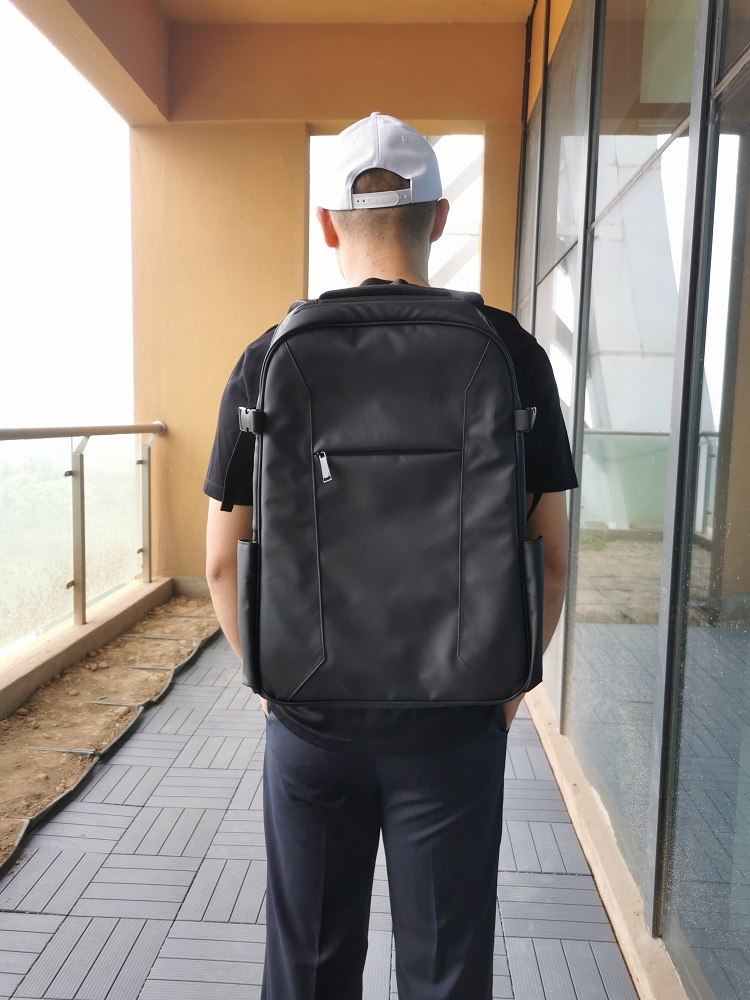
Provide the product format, intended contents, dimensions, quantity, material preferences, logo artwork and packing requirements. Reference images or drawings help explain changes.
Yes. A logo or available-color change may involve less development than a new pattern, compartment arrangement or carrying structure. Confirm the actual scope before comparing prices and lead times.
MOQ depends on the model, material sourcing, color allocation and customization. Request a project-specific figure rather than applying one product's MOQ to every backpack.
Describe the intended load and handling conditions, then agree on relevant construction checks and tests. Terms such as heavy-duty or premium should not replace measurable requirements.
Magicleaf can review this requirement for suitable projects. Specify the devices, usable space, required wireless functions and acceptance criteria before approving the configuration.
Confirm the sample, materials, dimensions, artwork, components, packing and inspection requirements. Record any agreed revisions so production follows the same specification.
A practical brief allows style, durability and branding requirements to be reviewed together. Include the following details when requesting a project assessment:
Magicleaf can review the proposed configuration and identify the sampling work involved. MOQ, development charges, production lead time and delivery terms should be confirmed for the specific project.