Welcome to Hubei Magicleaf Technology Co., Ltd.
Mobile: +8618566295225
E-mail: tina@magicleafbags.com

Mobile: +8618566295225
E-mail: tina@magicleafbags.com
Smartphones constantly transmit and receive signals over cellular, Wi‑Fi, Bluetooth, GPS, and NFC networks, which makes them indispensable—and also potential tools for tracking, profiling, and surveillance. In many situations, users want to ensure their phone is completely offline, not just in “airplane mode,” so that it cannot be contacted, hacked, or used as a location beacon. A signal blocking phone pouch (often called a Faraday pouch) provides a hardware solution: it uses conductive layers to form a portable Faraday cage that blocks radiofrequency (RF) signals in both directions when closed.
The concept originates from the Faraday cage, named after scientist Michael Faraday, who demonstrated in 1836 that a conductive enclosure can shield its contents from external electric fields. Modern security experts and digital‑rights organizations recommend Faraday bags and pouches for scenarios such as protests, border crossings, sensitive meetings, and high‑security facilities, because they physically isolate digital devices from networks rather than relying solely on software settings. Choosing the right signal blocking phone pouch manufacturer is therefore crucial to ensuring the product works as intended.
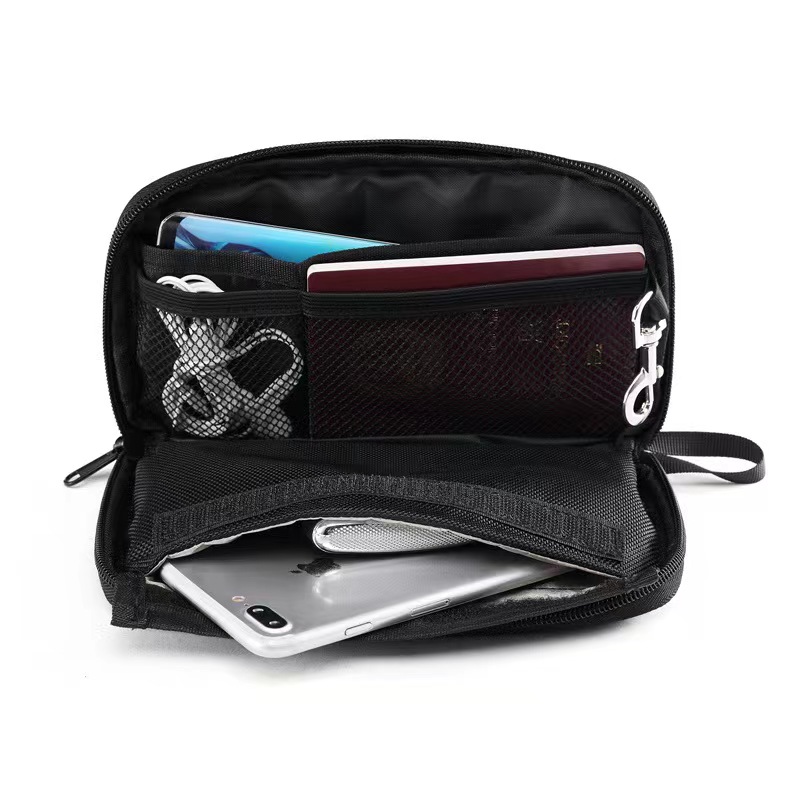
Faraday Principle in Everyday Language
A Faraday cage works because an external electromagnetic field causes charges in the conductive material to rearrange, cancelling the field inside the enclosure. When a signal blocking phone pouch uses conductive fabrics or meshes around its inner compartment, it creates the same effect: RF energy from cell towers, Wi‑Fi routers, or Bluetooth devices is absorbed and redistributed in the pouch’s shielding layers, rather than reaching the phone.
Because mobile phones rely on continuous RF communication to maintain network registration, data sessions, and location services, blocking these signals means:
The phone cannot connect to the cellular network, which prevents calls, texts, and data.
Wi‑Fi and Bluetooth connections cannot be established or maintained.
GPS and other satellite‑based services are unable to deliver position data to the device.
A professionally designed pouch from a competent signal blocking phone pouch factory aims to achieve enough attenuation across these bands that the phone effectively “disappears” from the network while sealed.
Most quality pouches are designed to attenuate at least:
Cellular bands (2G, 3G, 4G, 5G) in common regional allocations.
Wi‑Fi at 2.4 GHz and 5 GHz.
Bluetooth and BLE around 2.4 GHz.
GPS / GNSS bands around 1.2–1.6 GHz.
NFC and RFID near 13.56 MHz for card protection.
Forensic and academic tests have shown that not all products perform equally; some “Faraday” bags failed to block all calls or certain technologies, highlighting the importance of real RF performance testing by the signal blocking phone pouch manufacturer.
This is the most common question. Software options like power‑off and airplane mode are helpful but have limitations:
Malicious apps or baseband vulnerabilities can potentially alter radio states without clear user consent.
Some devices maintain limited communication even when “off” (for example, for specific features or remote management in specialized environments).
Human error—forgetting to enable airplane mode, or accidentally turning radios back on—is common.
Security practitioners often stress that a physical shield, such as a signal blocking phone pouch, is a stronger guarantee because it does not depend on the phone’s hardware or software being trustworthy.
DIY methods sometimes work in limited tests, but research on mobile device shielding shows that improvised solutions are inconsistent. Gaps, poor seals, and incorrect materials allow certain frequencies to leak through. A forensic examination of several mobile device Faraday bags found that some commercial products also underperformed, underscoring that design and testing matter greatly.
A purpose‑built product from a specialized signal blocking phone pouch company typically uses multi‑layer conductive fabrics, tested closure designs, and quality control to ensure consistent performance across devices and networks.
When a phone is placed into a signal blocking phone pouch, it initially increases transmit power trying to reach the network, but once it realizes there is no service, it usually reduces activity. There is no direct physical interaction with the electronics; the pouch simply blocks radio waves. For long‑term storage, many users place the phone in airplane mode or power it off before sealing it, which further reduces battery drain and aligns with guidance on minimizing unnecessary RF emissions.
Practical user tests include:
Place the device inside, seal the pouch completely, and attempt to call it from another phone.
Try sending a message or using a messaging app and verify that nothing arrives until the device is removed.
If possible, perform tests in areas with strong signal to confirm robust blocking.
Forensic and academic papers recommend multi‑network, multi‑frequency testing for critical applications, but these simple checks are a good baseline for everyday buyers evaluating a product from a signal blocking phone pouch supplier.
Common scenarios include:
High‑sensitivity business meetings, boardroom discussions, and legal consultations.
Travel across borders or through airports, where devices may be inspected or copied.
Participation in protests or events where location tracking and mass metadata collection are concerns.
Secure facilities (research labs, defense sites, certain government offices) where RF emissions are strictly controlled.
In these situations, security guidance increasingly recommends hardware‑based controls such as Faraday pouches alongside policy and software controls.
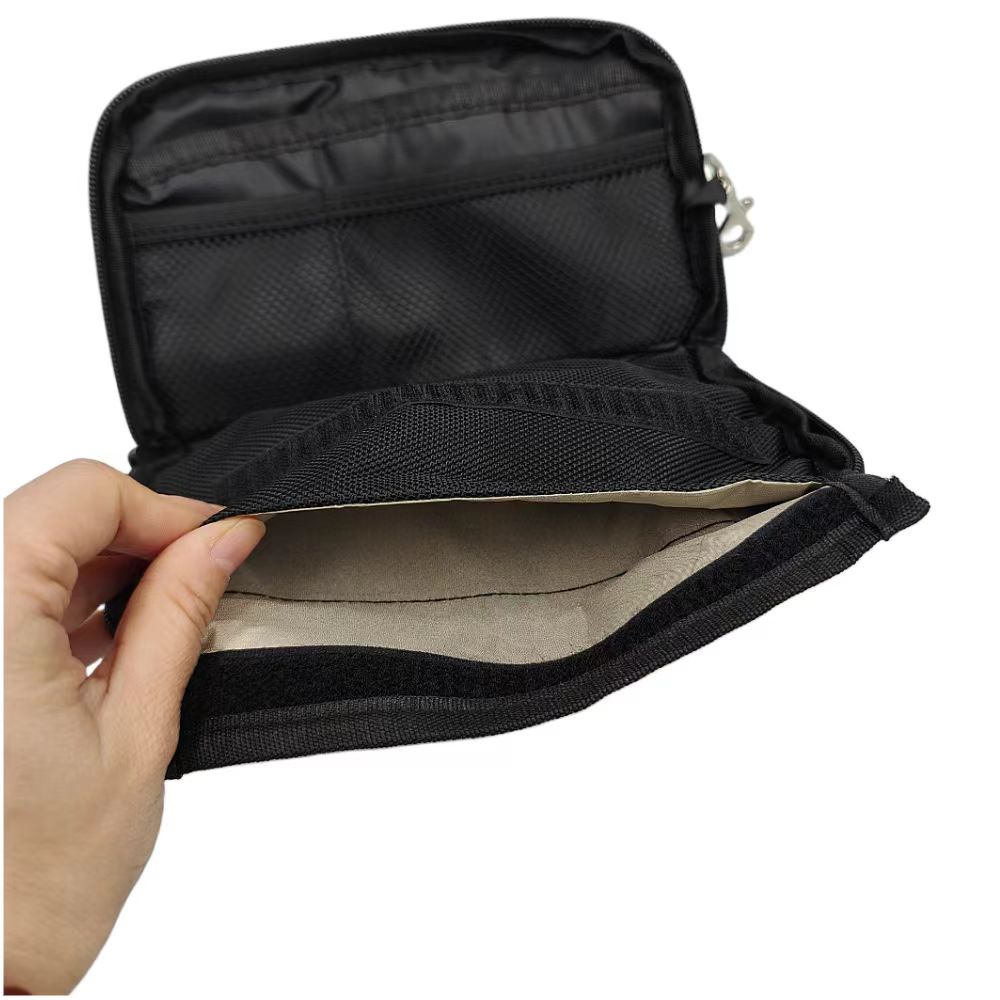
Shielding Materials and Construction Quality
The most important factor is RF performance. Specialist technical sources describe how RF‑shielded fabrics combine conductive fibers or coatings with flexible substrates to provide broad‑band attenuation. A reliable signal blocking phone pouch manufacturer focuses on:
Full enclosure of the device, including seams and corners, with conductive layers.
Overlapping closure systems (for example, zipper plus internal fold‑over shield) to prevent gaps.
Multi‑layer construction to improve attenuation across diverse frequencies.
Poor stitching, thin materials, or partial coverage can significantly reduce effectiveness, as shown in field tests of phone shielding devices.
Practical Design and Everyday Usability
Customers also care about how the pouch feels and functions day‑to‑day:
Size and capacity: It should comfortably fit modern smartphones, sometimes with a case.
Closure design: Zippers, Velcro, or magnetic closures should be intuitive yet secure enough to maintain shielding integrity when closed.
Durability: Exterior materials should withstand frequent handling, travel, and being carried in bags.
A good signal blocking phone pouch company blends technical RF requirements with ergonomic design so that users actually adopt and use the pouch consistently.
OEM Branding and Customization
Business and institutional buyers often need OEM solutions. A capable signal blocking phone pouch factory can:
Add corporate logos, colors, or labels to the pouch exterior.
Customize dimensions or add extra pockets for IDs, cards, or passports.
Provide tailored packaging and documentation for employee or customer distribution.
These capabilities help organizations turn a security tool into an integrated part of their brand and policy framework.
Customers frequently ask how professional pouches compare to other methods of controlling connectivity and privacy. The table below summarizes key differences drawing on security, RF, and usability discussions.
|
Option / Factor |
Professional Signal Blocking Phone Pouch | DIY Foil or Random Metal Box | Software‑Only (Airplane Mode, Settings) | In‑Facility RF Controls (Detectors / Jammers) |
|---|---|---|---|---|
| RF Blocking Reliability | High, when built and tested properly; blocks cellular, Wi‑Fi, Bluetooth, GPS, NFC in both directions while sealed. | Uncertain; gaps, tears, poor fit often allow some signals through. | Limited to OS‑exposed radios; may not stop baseband‑level or future exploits; relies on user behavior. | Very high within controlled areas; uses detectors and policy enforcement, sometimes jamming where legal. |
| Ease of Use | Simple: insert phone, close pouch; no configuration or training needed. | Awkward, fragile, and not suitable for professional environments. | Familiar, but requires discipline and understanding of settings. | Requires infrastructure, monitoring staff, and policy compliance. |
| Portability | Very portable; fits pocket or bag, usable anywhere. | Portable but impractical and visually unappealing. | Built into the phone, no extra item, but weaker guarantees. | Not portable; fixed to specific rooms or facilities. |
| Cost | Moderate per pouch; scalable for individuals and organizations. | Very low, but not reliable or durable. | No additional hardware cost but limited assurance. | High setup and maintenance cost; mainly for high‑security sites. |
| Suitable Use Cases | Individuals, enterprises, law enforcement, journalists, and activists needing reliable on‑the‑go privacy tools. | Ad‑hoc experiments; not recommended for serious security. | Everyday low‑risk use; not sufficient for sensitive scenarios. | Government or corporate high‑security zones; complements pouches for off‑site situations. |
For many users, a professional pouch from a trusted signal blocking phone pouch supplier strikes the best balance between strong protection, practicality, and cost.
To show how these products are used in practice, consider a case study based on common patterns reported in security and RF‑shielding contexts.
A regional law firm handled high‑profile litigation and mergers where client confidentiality was paramount. Partners worried that mobile devices left on during strategy meetings could introduce risk, even if placed on the table with notifications muted. They also wanted a solution for visiting clients who arrived with phones and wearables.
The firm’s IT and compliance team drafted requirements and approached a specialized signal blocking phone pouch manufacturer. Key requirements included:
Proven RF blocking across major cellular and Wi‑Fi bands.
Professional, discreet appearance suitable for boardrooms.
Ability to add the firm’s logo and simple usage instructions.
After evaluating samples and reviewing RF test summaries from the signal blocking phone pouch factory, the firm chose a zipper‑based pouch model with an inner Faraday compartment and an outer pocket for non‑shielded items (like business cards).
Before rolling out firm‑wide, the IT team tested the pouches:
Calling and messaging phones in the pouch from multiple networks.
Attempting Wi‑Fi and Bluetooth connections from laptops and tablets.
Conducting spot checks using RF detection equipment used to monitor compliance with no‑phone policies in certain meeting rooms.
The devices inside the sealed pouches consistently failed to connect, matching expectations for well‑constructed Faraday enclosures and aligning with academic findings that properly designed shielding devices can fully block 3G/4G, Wi‑Fi, and Bluetooth signals.
The firm updated its meeting protocols:
Every secure meeting room includes a tray of branded signal blocking phone pouches.
Participants are asked to place phones and smartwatches inside and fully zip them closed.
Visitors receive a brief explanation of the pouch’s role in protecting their own confidentiality.
Several months later, one of the senior partners summarized the impact:
“Introducing signal blocking phone pouches has been one of the simplest yet most effective changes to our security posture. Clients feel reassured when they see a tangible privacy measure in place, and our staff appreciate having a clear, easy rule: if it’s in the pouch, it’s offline. Working directly with a dedicated signal blocking phone pouch supplier allowed us to balance technical performance with a design that fits our professional environment.”
The firm also noted that adoption remained high because the pouches were easy to use and integrated cleanly into existing meeting routines, echoing broader security recommendations that practical, user‑friendly tools are more likely to be used correctly.
When selecting a signal blocking phone pouch factory, focus on evidence of technical competence and production reliability.
1. RF Testing and Documentation
Ask for:
Test summaries or certificates showing attenuation across cellular, Wi‑Fi, Bluetooth, and GPS bands.
Information on test methods, such as repeated call attempts, data transfers, or lab‑based measurements.
Any third‑party or academic references to similar materials or designs.
Academic work from institutions and independent forensic labs demonstrates how proper testing identifies which shielding products actually work under realistic conditions. A serious signal blocking phone pouch supplier should be comfortable discussing how they validate performance.
2. Materials and Manufacturing Quality
Review samples and look for:
Consistent stitching, especially around seams and zippers.
Shielding layers that fully cover the protected compartment without obvious gaps.
Durable yet flexible outer materials that suit your usage scenario (business, field operations, etc.).
Long‑term reliability is critical for enterprise or law‑enforcement deployments, where a damaged pouch could lead to unnoticed exposure of sensitive data.
3. OEM and Customization Capabilities
For organizations wanting branded solutions or special layouts, evaluate whether the signal blocking phone pouch company can:
Add logos and choose colors that align with your brand.
Adjust sizes for different devices (large phones, radios, tablets).
Offer additional features such as lanyard attachments, internal dividers, or label windows.
This flexibility is particularly valuable for large corporate or government programs where both security and user experience matter.
Even with a high‑quality pouch, correct usage and maintenance are important:
Always ensure the device is entirely inside the shielded compartment and the closure is fully sealed. Partial closure can dramatically reduce effectiveness.
For extended periods, consider enabling airplane mode or switching the device off before placing it inside to conserve battery and align with RF‑exposure best practices.
Periodically test the pouch by attempting to contact the sealed device from another phone or device, especially after heavy use or visible wear.
Avoid puncturing, tearing, or excessively bending the pouch, which can damage conductive layers.
Store the pouch in a dry environment when not in use to preserve material integrity.
These habits reflect the broader security guidance that physical measures should be combined with sensible user behavior for best results.
For buyers seeking a dependable partner for privacy and RF‑shielding products, Magicleaf Technology stands out as a leading signal blocking phone pouch manufacturer in China. As a dedicated signal blocking phone pouch factory, Magicleaf focuses on integrating high‑performance Faraday lining materials into functional, stylish pouches suited to both professional and everyday use.
As an experienced signal blocking phone pouch supplier, Magicleaf Technology offers:
Multi‑layer Faraday interiors designed to block cellular, Wi‑Fi, Bluetooth, GPS, and NFC signals when properly closed.
Zipper‑chain and other user‑friendly designs that encourage consistent adoption in corporate, government, and personal contexts.
OEM customization, including customer logos, color schemes, and packaging, enabling enterprises to deploy branded privacy solutions at scale.
By combining sound electromagnetic principles with rigorous testing, thoughtful design, and strong OEM support, Magicleaf Technology has established itself as a trustworthy signal blocking phone pouch company for clients who take digital privacy and RF security seriously.
Glenville State University – “Of WiFi & Faraday Cages: Campus Connectivity Issues Explained” (introduction to Faraday cages and RF shielding): https://www.glenville.edu/phoenix/wifi-faraday-cages-campus-connectivity-issues-explained
NIH / NCBI – “Introduction” to radiofrequency communication and mobile device signals in Health Effects of Cell Phone Radiofrequency Radiation (background on how phones communicate with networks): https://www.ncbi.nlm.nih.gov/books/NBK564529/
Edith Cowan University – “A forensic examination of several mobile device Faraday bags” (evaluation of Faraday bag performance for 3G/4G, Wi‑Fi, Bluetooth): https://ro.ecu.edu.au/cgi/viewcontent.cgi?article=1165&context=adf
Purdue University – “A Field Test of Mobile Phone Shielding Devices” (field tests of mobile phone shielding and Faraday devices): https://docs.lib.purdue.edu/cgi/viewcontent.cgi?article=1033&context=techmasters
Cryptsec & Moses Equipment – Practical guidance on Faraday and electronic security, including Faraday bag usage at protests: https://cryptsec.se/faraday-and-electronic-security/ and https://mosequipment.com/blogs/blog/how-to-use-a-faraday-bag-to-protect-your-phone-at-protests