Mobile: +8618566295225
E-mail: tina@magicleafbags.com

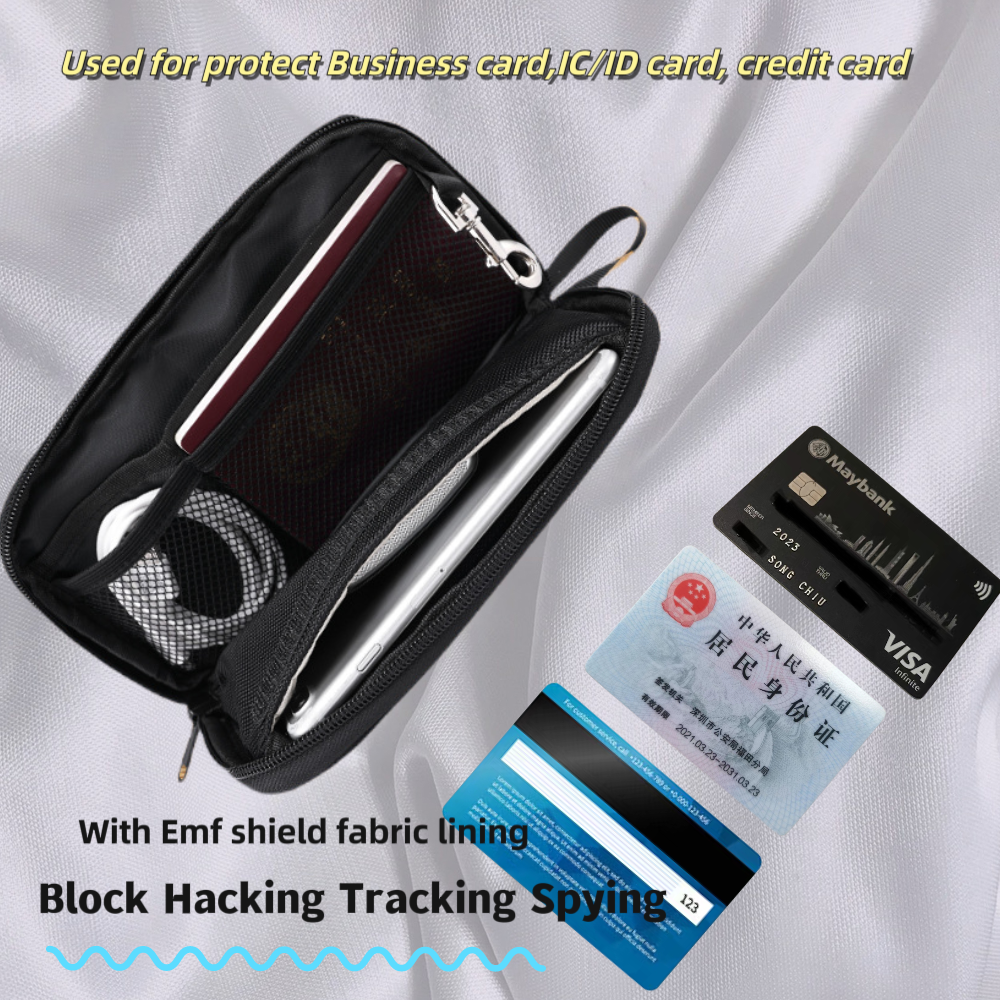
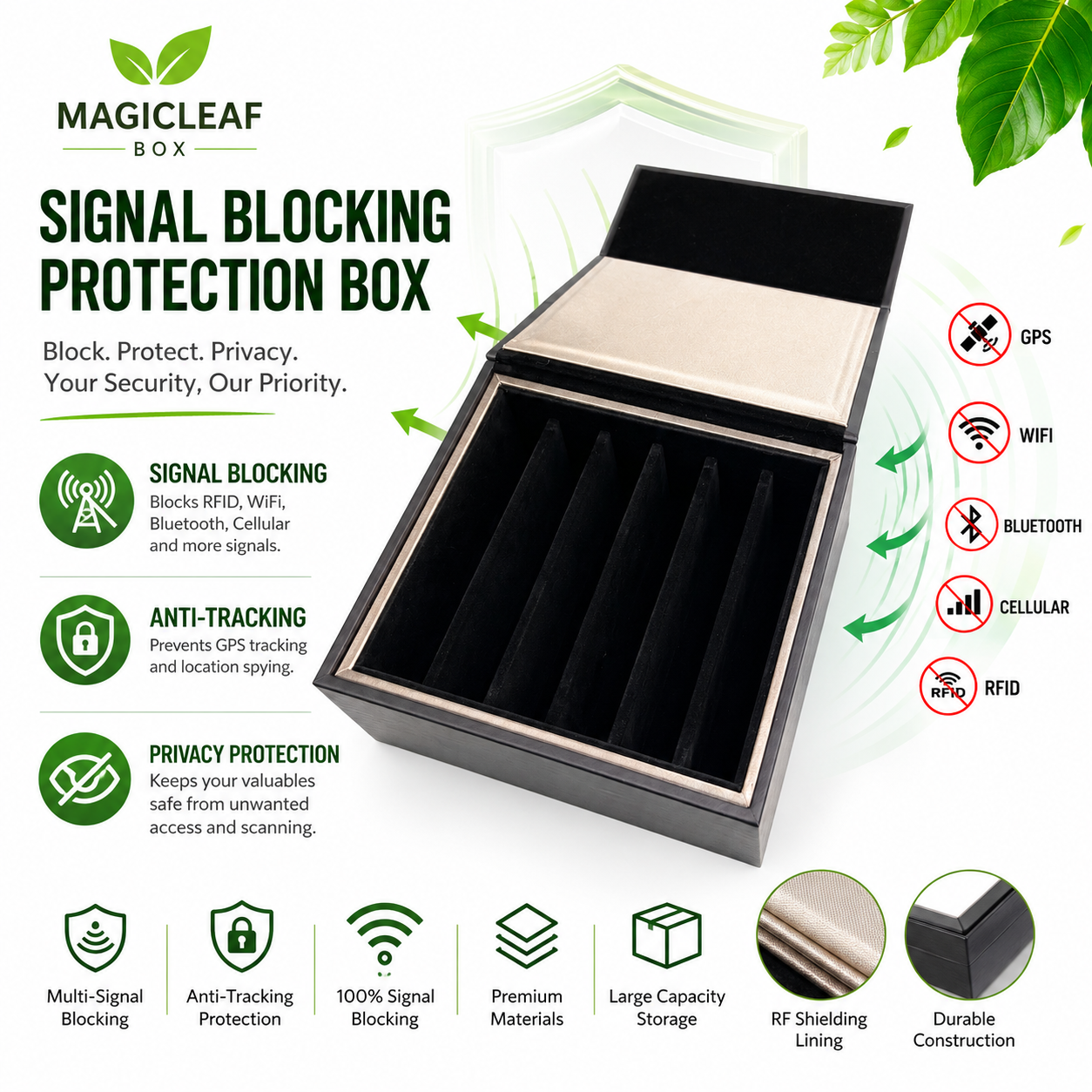
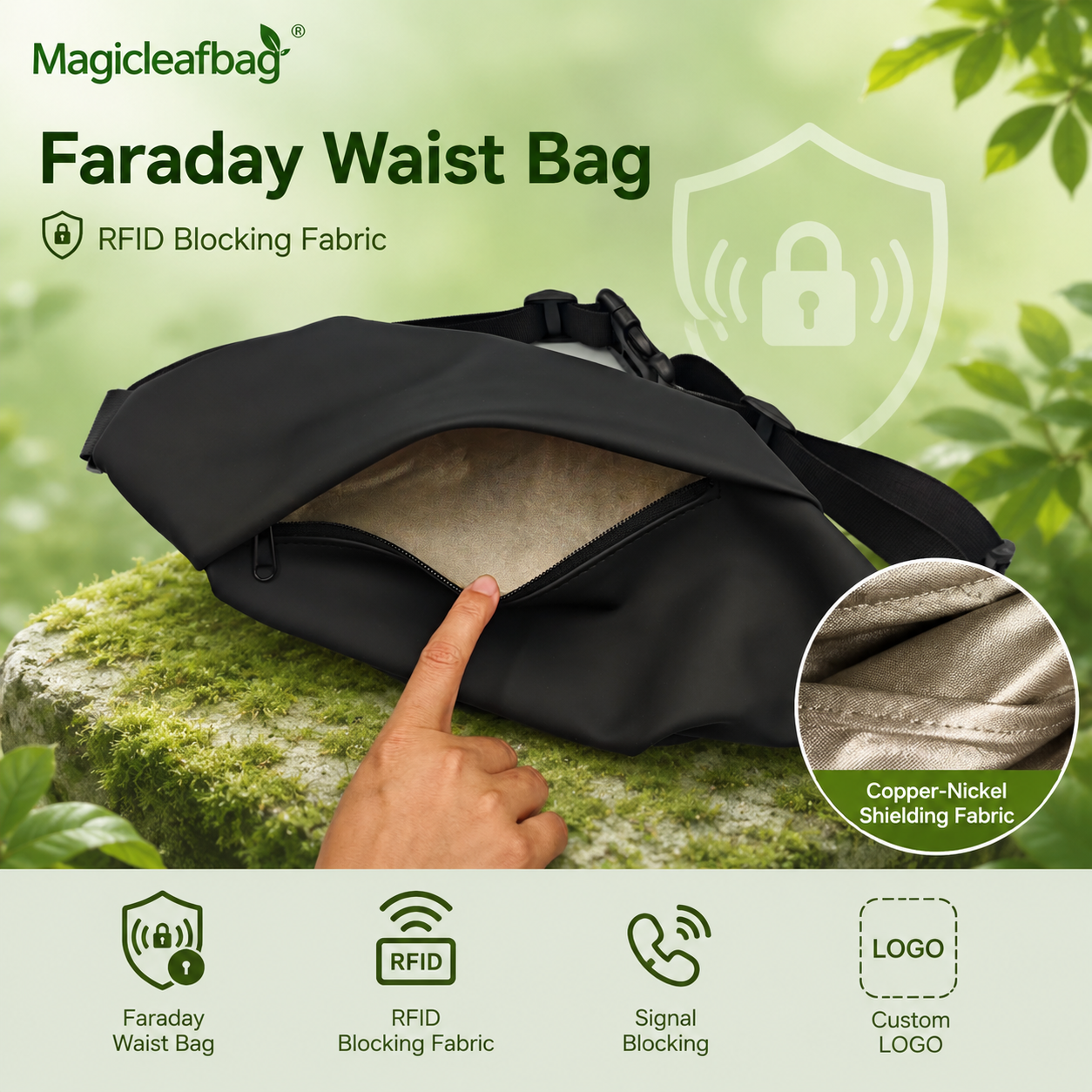
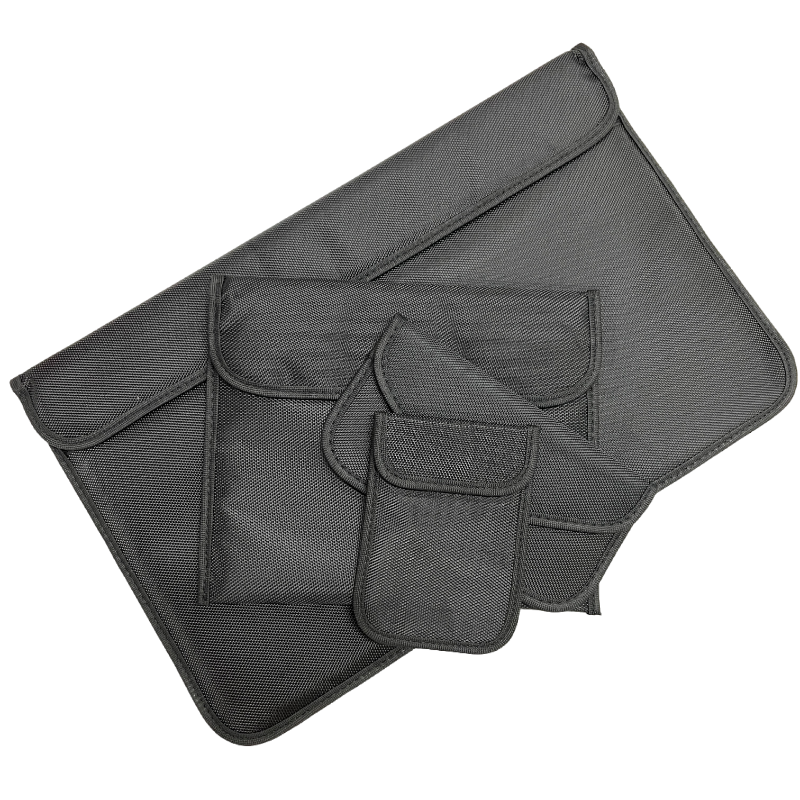
A Faraday cage or Faraday shield is an enclosure used to block electromagnetic fields. All Faraday cages are named after scientist Michael Faraday, who invented them in 1836. secure your privacy and data by isolating digital devices from RF signals so you can’t be tracked, hacked, surveilled or identified. Welcome your OEM order!
Product Details
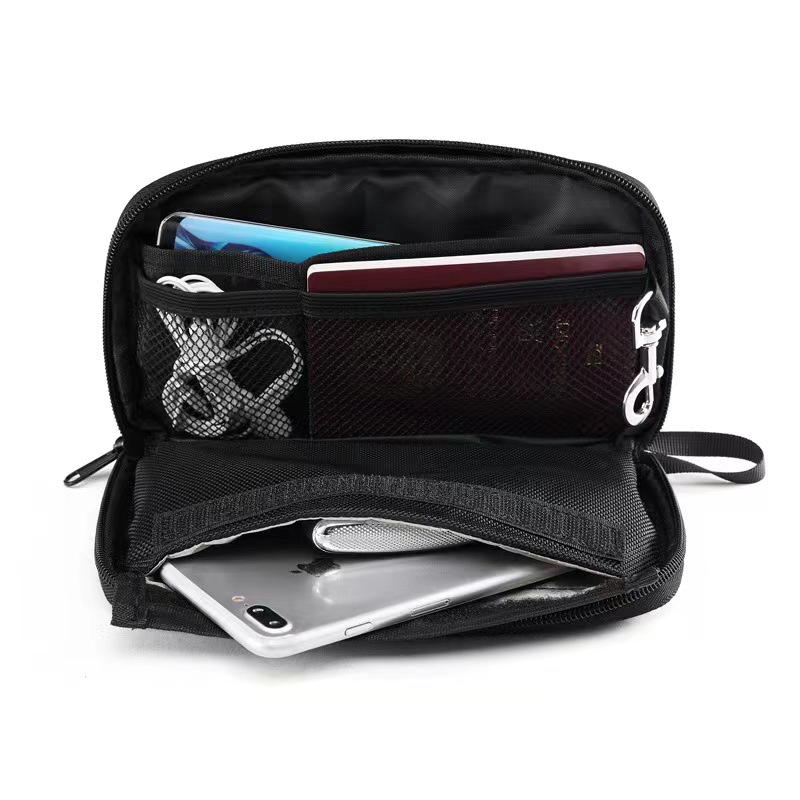
Magicleaf Zipper Chain Signal Blocking Phone Pouch with Faraday Lining is an enclosure used to block electromagnetic fields. All Faraday cages are named after scientist Michael Faraday, who invented them in 1836. secure your privacy and data by isolating digital devices from RF signals so you can’t be tracked, hacked, surveilled or identified. Welcome your OEM order!
Smartphones constantly communicate with cellular networks, Wi‑Fi, Bluetooth, GPS, NFC, and other radio systems, which makes them powerful tools—and also portable tracking and surveillance devices. In sensitive situations, many people now want a simple way to cut all wireless connections without having to power their phone off or trust software settings. A signal blocking phone pouch based on Faraday‑cage principles offers a practical hardware solution: slide your device into the pouch, close it fully, and all external RF signals are blocked.
Security specialists describe Faraday products as enclosures that isolate digital devices from radiofrequency (RF) signals so they cannot be tracked, hacked, or remotely accessed. The principle dates back to Michael Faraday’s 1836 experiments, where he demonstrated that a conductive enclosure can shield its contents from external electric fields. Modern Faraday bags and pouches apply this physics to mobile phones, key fobs, credit cards, and more. A well‑engineered product from a professional signal blocking phone pouch company can protect privacy in corporate, government, forensic, and everyday civilian contexts.
Faraday Cages in Simple Terms
In a classic Faraday cage, an electrically conductive layer surrounds the protected space. Incoming electromagnetic waves induce currents in the conductor, causing the energy to be distributed and effectively cancelled before it reaches the interior. When this principle is applied to a portable signal blocking phone pouch, the conductive fabric or mesh forms an RF shield around your device as long as the pouch is fully closed.
University‑level explanations of mobile communication show that phones continuously exchange radio signals with base stations for voice, data, SMS, and location tracking. By putting the device in a properly designed Faraday enclosure, those signals are blocked in both directions, which:
Prevents networks and apps from tracking location via cellular, Wi‑Fi, or GPS.
Stops incoming connections that could be used for hacking or remote surveillance.
Blocks outgoing data that might be sent by spyware or misconfigured apps.
What Frequencies Does It Block?
A quality signal blocking phone pouch supplier designs products to block a wide range of frequencies, typically including:
Cellular networks (2G, 3G, 4G, 5G).
Wi‑Fi (2.4 GHz and 5 GHz).
Bluetooth and BLE.
GPS/GNSS signals.
RFID and NFC bands.
Independent tests of mobile Faraday bags have shown that performance varies widely among products, with only some fully blocking all tested 3G/4G, Wi‑Fi, and Bluetooth signals. This is why choosing a trusted signal blocking phone pouch factory with demonstrated RF‑shielding performance is important.
Turning off radios in software or powering the phone down can help, but several risks remain:
Some malware may keep radios active or re‑enable them without clear notification.
A powered‑off appearance does not guarantee that all components have ceased transmitting.
Remote wake or baseband‑level attacks may bypass OS‑level controls in some threat models.
A signal blocking phone pouch creates a physical barrier—no signal in, no signal out—independent of software settings or device configuration, which security professionals recommend for high‑risk scenarios.
Studies and field guidance point out that improvised solutions like foil wraps or random metal containers can be inconsistent, with gaps, tears, or poor closures allowing RF leaks. A forensic examination of mobile device Faraday materials found that only certain purpose‑built bags fully blocked all tested calls and wireless protocols, while others underperformed marketing claims. A properly engineered signal blocking phone pouch company uses multi‑layer conductive fabrics and tested designs to ensure reliable shielding.
RF shielding does not interact directly with the phone’s electronics; it simply prevents radio waves from reaching the device. Health and regulatory resources describe how phones automatically raise their transmit power when signal strength is low. When sealed inside an effective Faraday pouch, the phone quickly loses network connection and stops active communication attempts, so long‑term damage is not expected. For extended storage, many users place the device in airplane mode or power it off before putting it inside as an extra precaution.
Common user tests include:
Place the phone inside, close the pouch completely.
Ask someone to call or message the phone; the call should not connect and messages should not arrive until the device is removed.
If available, test Wi‑Fi and Bluetooth connectivity from another device.
Forensic research suggests that robust testing ideally includes multiple networks and frequencies, but simple call and Wi‑Fi tests provide a practical first check for everyday users. Reputable signal blocking phone pouch suppliers often run more formal RF tests in controlled environments.
Typical use cases include:
Business meetings where confidential information or trade secrets are discussed.
Travel through airports or border crossings where devices may be inspected.
Protests and sensitive gatherings where location tracking and mass surveillance are concerns.
Secure workspaces in corporate, government, or research environments with strict device policies.
In these situations, a portable signal blocking phone pouch offers a simple, low‑friction way to enforce “offline” status.
Shielding Materials and Construction
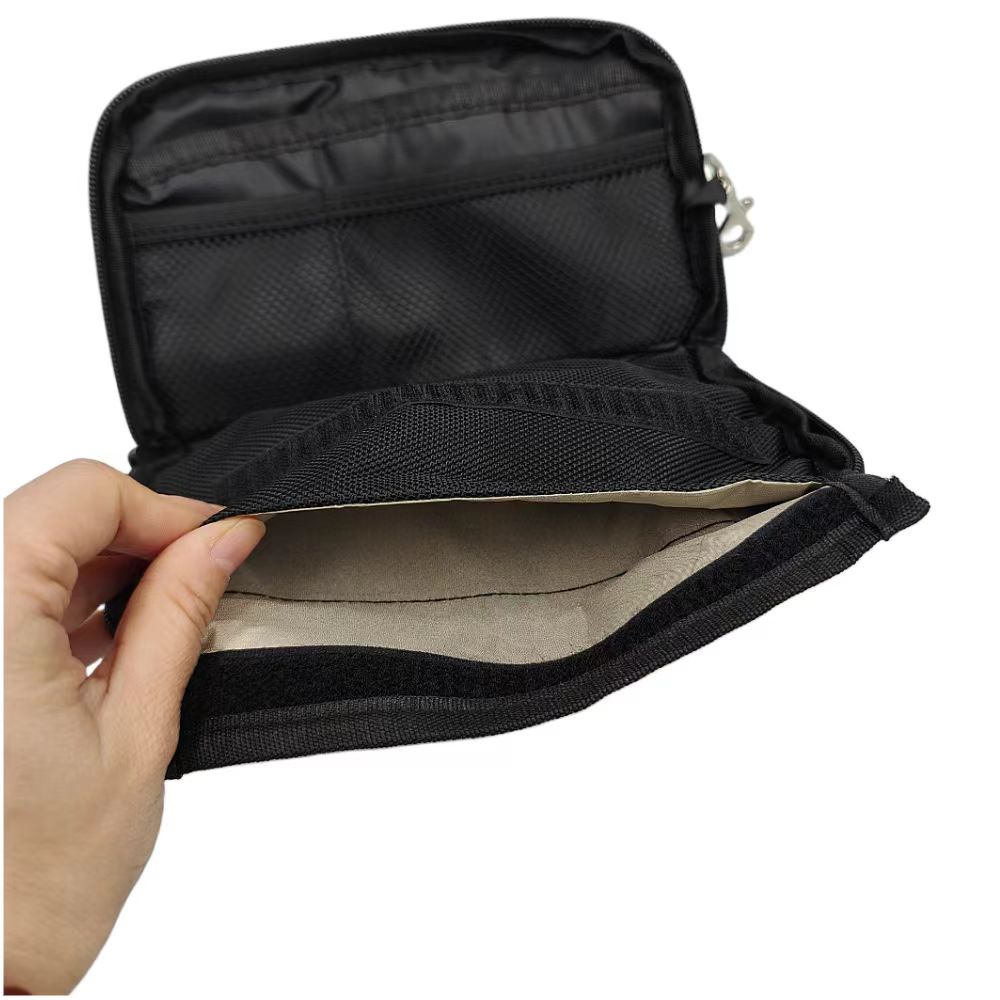
The core of any effective signal blocking phone pouch is its shielding material. Many professional products use multi‑layer woven or laminated fabrics incorporating metals like copper, nickel, or silver to achieve high RF attenuation across wide frequency ranges.
A trustworthy signal blocking phone pouch supplier will pay attention to:
Continuous shielding coverage on all sides, including seams and corners.
Overlapping closures (such as fold‑over flaps or zipper + internal shield) to avoid signal leaks.
Layer stacking that balances flexibility, durability, and attenuation.
For example, the Magicleaf Zipper Chain Signal Blocking Phone Pouch with Faraday Lining combines an outer layer designed for everyday wear with an inner RF‑shielding compartment that functions as a true portable Faraday cage.
Exterior Design, Zippers, and Everyday Usability
Consumers also want practicality and style. A good signal blocking phone pouch company will focus on:
A zipper or closure system that is easy to use yet ensures the shielded compartment is fully sealed.
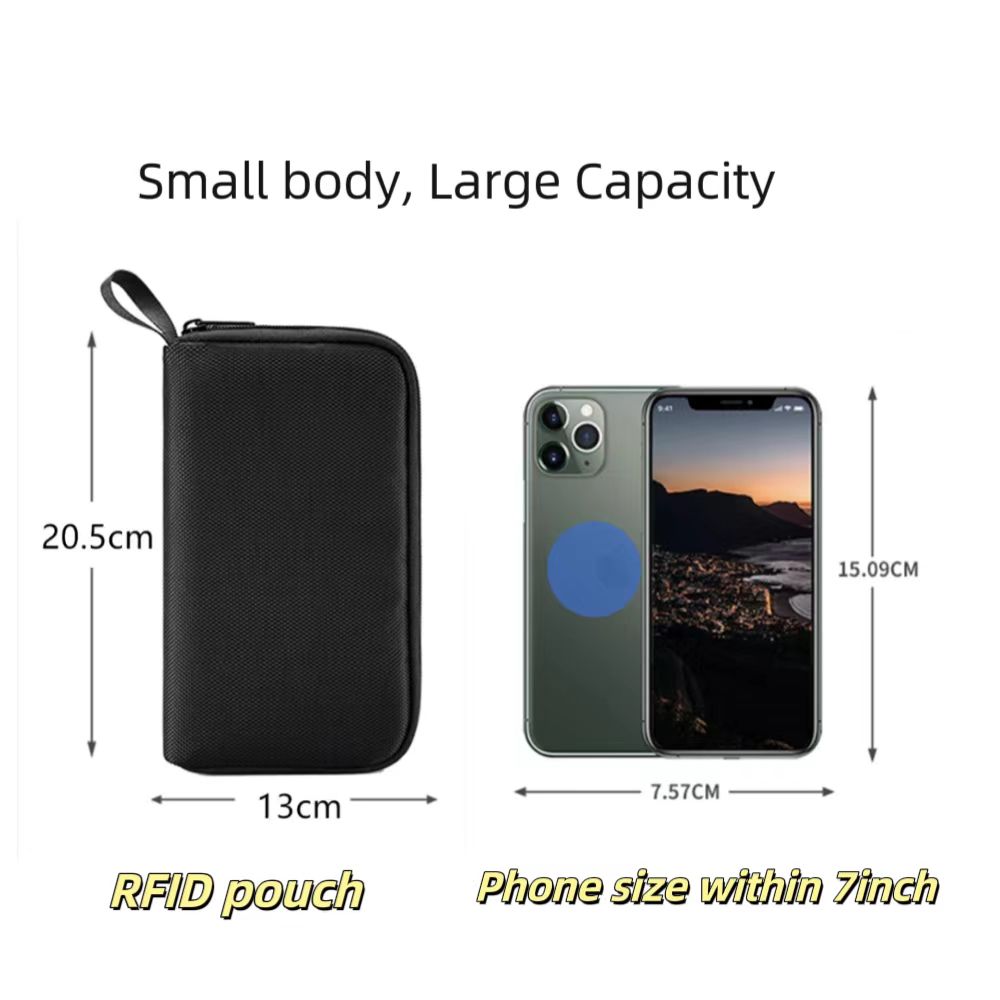
Adequate size to accommodate common smartphones with cases.
Materials and stitching that withstand daily use in bags, pockets, or vehicles.
Some designs, like Magicleaf’s zipper chain model, also provide a more premium look that fits business or professional settings, making the pouch feel like a natural accessory rather than a specialized lab tool.
OEM Branding and Customization
For enterprises, agencies, and brands, OEM customization is often important. A capable signal blocking phone pouch factory can:
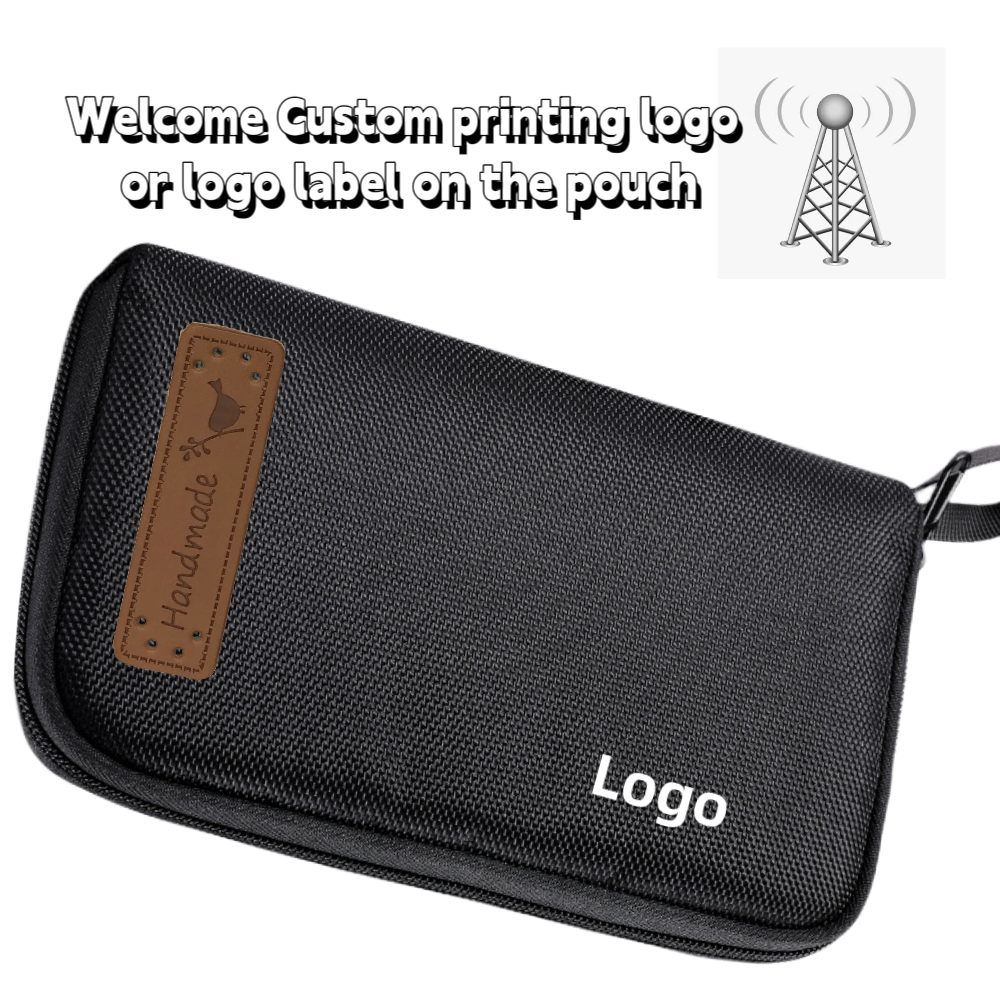
Add logos or custom labels to the exterior.
Adjust dimensions or internal pocket layout to fit particular device profiles or card combinations.
Supply tailored packaging and instructions for corporate rollouts or retail channels.
This combination of security function and branding helps companies reinforce their commitment to privacy and data protection.
Customers often compare a professional signal blocking phone pouch with DIY methods and software‑only approaches. The table below summarizes key differences based on RF and security guidance.
| Option / Factor | Professional Signal Blocking Phone Pouch | DIY Foil / Metal Tin | Software‑Only (Airplane Mode, Settings) | Hardware RF‑Control Cases & Detectors |
|---|---|---|---|---|
| RF Blocking Reliability | High when built with tested Faraday fabrics and proper closure; blocks cellular, Wi‑Fi, Bluetooth, GPS, NFC in both directions. | Inconsistent; gaps, tears, and imperfect sealing often allow some signals through. | Depends on OS/hardware; radios may be re‑enabled by apps, malware, or user error. | Very high; integrates hardware to control radios or detect active phones but at higher cost and complexity. |
| Ease of Use | Very easy: insert device, seal pouch; no configuration required. | Awkward to wrap/unwarp; not durable. | Familiar to most users, but requires trust in software controls. | More complex setup; often managed by IT/security teams. |
| Protection Scope | Prevents tracking, remote access, and over‑the‑air attacks while sealed. | Partial or unpredictable blocking. | May not protect against baseband‑level issues or certain side channels. | Offers fine‑grained control, may include audio/visual masking. |
| Portability | Highly portable; fits in pocket, bag, or car. | Portable but fragile and visually unappealing. | Built into phone, no extra item, but limited assurance. | Less portable; designed mainly for secure facilities or enterprise deployments. |
| Professional / Corporate Use | Suitable for executive travel, secure meetings, law‑enforcement evidence handling, and privacy‑conscious organizations. | Not suitable; lacks professional reliability. | Insufficient on its own for high‑security environments. | Ideal for high‑security government or defense use; higher cost. |
For most individuals and many organizations, a professionally designed signal blocking phone pouch offers the best balance of reliability, cost, and convenience.
To illustrate how working with a dedicated signal blocking phone pouch company plays out in practice, consider a typical scenario inspired by real‑world security practices and RF‑shielding deployments.
Background
A mid‑size technology firm regularly holds strategy meetings involving sensitive product roadmaps and client data. The security team identified smartphones as a key risk: even with strict policies, employees occasionally forgot to switch devices off or leave them elsewhere. The company also wanted to minimize the need for intrusive device checks at the door.
The firm approached a specialized signal blocking phone pouch supplier to design a solution that would:
Allow staff and visitors to keep phones with them physically, while preventing any connectivity during meetings.
Integrate company branding to communicate a strong privacy and security message.
Be straightforward to use, with minimal training.
The supplier proposed a custom version of a zipper‑based signal blocking phone pouch with:
A corporate logo on the exterior.
An internal Faraday compartment sized for modern smartphones.
Color‑coded labels to differentiate fully shielded pouches from ordinary cases.
Testing and Rollout
Before full deployment, the company’s security team performed internal tests:
Multiple calls and messages to devices inside the pouches on different networks.
Wi‑Fi and Bluetooth discovery attempts from nearby laptops and tablets.
Spot checks with RF detection equipment used for monitoring restricted spaces.
Devices inside the pouches failed to connect consistently, matching expectations for properly shielded Faraday enclosures. After successful testing, the company provided each meeting room with a small rack of branded pouches. Participants are instructed to place phones inside and zip them closed upon entry.
Results and Client Testimonial
After several months, the security manager reported:
“The signal blocking phone pouches have become a standard part of our secure meeting protocol. Staff appreciate the simplicity—drop the phone in, zip it shut, and you know it’s offline. We’ve had no RF‑related incidents in our sensitive sessions since rollout, and the branded pouches reinforce our commitment to client confidentiality.”
This experience aligns with recommendations from electronic‑security experts who advocate hardware‑based RF isolation, such as Faraday enclosures, as a strong component of layered mobile device protection strategies.
Choosing the right signal blocking phone pouch factory is essential if you need dependable performance at scale. Drawing on RF‑shielding research, forensic tests, and security best practices, consider the following criteria.
RF Performance and Testing
Ask prospective suppliers about:
Independent or in‑house RF tests across relevant bands (cellular, Wi‑Fi, Bluetooth, GPS, NFC).
Test protocols (for example, multiple device models, call attempts, data sessions).
Any documented performance data or certifications related to shielding effectiveness.
Forensic studies clearly show that not all “Faraday” products are equal, so a credible signal blocking phone pouch supplier should be able to demonstrate consistent blocking behavior.
Materials, Durability, and Quality Control
Inspect samples for:
Multi‑layer shielding fabrics without obvious gaps.
Robust stitching and secure zip or closure mechanisms.
Comfort and practicality in everyday use (weight, flexibility, finish).
A dependable signal blocking phone pouch company will typically operate under established quality systems and provide consistent workmanship across batches.
OEM Capabilities and Design Support
For OEM orders, evaluate whether the factory can:
Integrate your brand identity (logos, colors, packaging).
Suggest design refinements to improve usability and RF performance.
Scale production while maintaining lead times and quality standards.
A partner with genuine design support capabilities can help you tailor products to specific user groups—executives, law‑enforcement, travelers, or privacy‑conscious consumers.
To get the most benefit from any signal blocking phone pouch, follow practical steps based on security and RF‑shielding guidance.
Ensure the device is fully inside the shielded compartment and that the zipper or closure is completely sealed.
For long sessions, consider enabling airplane mode or powering the device off before placing it inside, to reduce battery drain.
Periodically test the pouch (for example, monthly) by calling or messaging the device while it is sealed.
Avoid sharp objects or excessive bending that could damage the shielding layers.
Store the pouch in a clean, dry place when not in use to extend its life.
These simple habits help maintain consistent performance and extend the useful life of the product.
For organizations and individuals seeking a reliable OEM partner, Magicleaf Technology is a leading signal blocking phone pouch manufacturer in China. As a specialized signal blocking phone pouch factory, Magicleaf focuses on integrating high‑performance Faraday linings into everyday‑usable, durable pouches that suit professional and consumer environments.
As an experienced signal blocking phone pouch supplier, Magicleaf Technology can support:
Custom branding, including logos and design accents, on zipper‑chain signal blocking phone pouches.
Engineering of multi‑layer RF‑shielded interiors designed to block cellular, Wi‑Fi, Bluetooth, GPS, and NFC signals when properly closed.
OEM projects for corporate security programs, government agencies, law‑enforcement, and privacy‑focused retail brands.
By combining sound Faraday‑cage principles, attention to materials and testing, and strong OEM capabilities, Magicleaf Technology stands out as a signal blocking phone pouch company capable of delivering dependable privacy and RF security solutions at scale.
Get in Touch