Welcome to Hubei Magicleaf Technology Co., Ltd.
Mobile: +8618566295225
E-mail: tina@magicleafbags.com

Mobile: +8618566295225
E-mail: tina@magicleafbags.com
This article is meant for procurement teams, distributors, brand owners, and security-oriented buyers who need a clear way to judge whether an EMF protection bag fits a specific use case. Rather than treating the product as a generic accessory, the better approach is to examine how shielding works, what materials are used, which features affect performance, and how to compare options without relying on exaggerated claims.
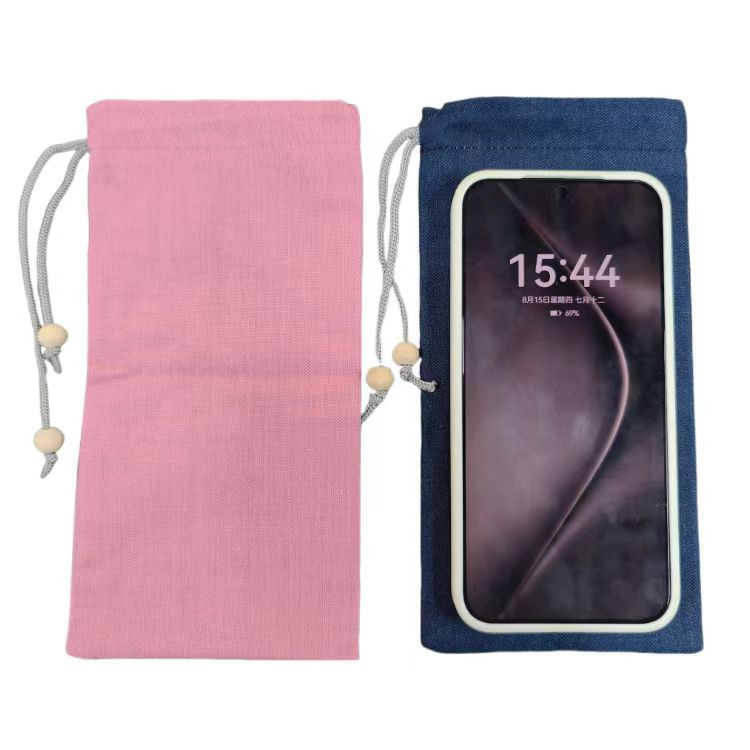
The core idea behind an EMF protection bag is simple: a conductive layer surrounds the device and reduces the passage of electromagnetic energy. When the enclosure is properly designed and fully closed, it can limit the amount of wireless signal that enters or leaves the bag. The actual result depends on the conductive fabric, seam construction, closure type, and the way the bag is used in daily handling.
In practical terms, buyers should think of the product as a shielding enclosure rather than a decorative pouch. That means the design has to solve two problems at the same time: it must block signals effectively, and it must still be durable enough for repeated use in travel, field work, or controlled transport.
Material choice is one of the most important purchase decisions for this category. Common constructions include silver fiber fabric, copper-nickel conductive textiles, and multi-layer shielding fabrics combined with outer materials such as nylon, polyester, or Oxford cloth. The shielding layer is what determines signal-blocking performance, while the outer layer mainly affects durability, handling, and appearance.
For buyers comparing suppliers, it helps to separate the two questions that are often mixed together: how strong the shielding layer is, and how well the overall bag holds up in actual use. A material that shields well but tears easily may not be a good option for bulk programs, while a durable outer shell without a reliable conductive lining will not meet the core functional requirement.
| Option | Signal Blocking | Portability | Durability | Customization | Best For |
|---|---|---|---|---|---|
| EMF Protection Bag | High when properly sealed | High | Good to excellent, depending on material | Logo, size, color, structure, and packaging | Privacy-focused B2B use and OEM projects |
| Shielding Phone Case | Moderate, depending on design | High | Good | Limited | Everyday phone use |
| Metal Box | High | Low | High | Very limited | Stationary storage |
| DIY Foil Solution | Unstable | Low | Poor | None | Temporary or emergency use |
For B2B buyers, the procurement decision usually includes more than shielding performance. Buyers also need to consider target dimensions, logo placement, packaging format, sample timing, order quantity, and whether the product needs to fit a retail program, a corporate kit, or a security workflow. In some projects, the same bag may be evaluated as a privacy tool, a branded gift item, and a controlled-transport accessory.
That is why OEM discussions should focus on the use case first and the appearance second. A compact pouch for a phone or key fob may need a different structure from a larger bag designed for tablets or multiple devices. If the buyer only asks for color and logo, the result may look finished but still fail the real application requirement.
A corporate buyer needed a simple device-storage solution for staff who regularly carried phones and access cards through meetings and travel. The main issue was not appearance but keeping the product compact, consistent, and easy to distribute across a larger team.
Challenge: The buyer wanted a privacy-oriented bag with a clear branding surface, stable shielding structure, and enough space for everyday devices without making the product too bulky.
Solution: Magicleaf developed a custom EMF protection bag using a conductive lining, a durable outer shell, and project-specific logo and packaging requirements to fit the buyer’s internal distribution plan.
Result: The buyer received a product that matched both the functional requirement and the branded presentation requirement, making it easier to standardize use across the procurement program.
The first step is to match the internal dimensions to the device or devices that will be stored inside. If the bag is too tight, it may be hard to seal properly; if it is too loose, the buyer may not get the most practical structure for daily use.
Buyers should ask for product dimensions, material details, sample availability, logo options, packaging options, and any available shielding-related information. If the project has a specific target frequency range, that should also be discussed early.
Yes. EMF protection bags are often used in corporate privacy kits, travel kits, controlled-storage workflows, and branded security programs. They are especially relevant when the buyer needs a functional product with a clear private-label presentation.
A full enclosure surrounds the device more completely and is generally more appropriate when signal reduction is the primary goal. A partial shield may be easier to carry, but it usually offers less consistent performance for secure storage applications.
The shielding layer only performs as intended when the closure is properly used. Even a good conductive fabric can underperform if the opening is left partially exposed or the seam structure is weak.
Hubei Magicleaf Technology Co., Ltd. manufactures custom-made bags with a factory space of more than 3,000 square meters, 50 skilled workers, and 100 sewing machines. The company’s product range includes signal-blocking bags, RFID shielding wallets, key pouches, laptop bags, waterproof and fireproof bags, and outdoor backpacks, which gives it relevant production experience for EMF protection bag projects.
For buyers evaluating OEM options, Magicleaf is positioned as a manufacturer that can support project-based customization in logo, size, color, structure, and packaging. That makes it a practical fit for brands and distributors that need a product aligned with a specific procurement workflow rather than a one-size-fits-all retail item.
Faraday Cage - MagLab
https://nationalmaglab.org/about-the-maglab/around-the-lab/what-is-that/faraday-cage/
Effective RF Shielding with Partial Faraday Cages
https://csef.usc.edu/History/2010/Projects/J0912.pdf
Cybersecurity of government departments and other public organisations
https://www.info.gov.hk/gia/general/202405/29/P2024052900494.htm
SFP1215W Forensic Pouch
https://www.ojp.gov/pdffiles1/nij/nlectc/239597.pdf
A Faraday Cage Exploration
https://wiki.laptop.org/mediawiki/images/3/3f/Faraday_Cage_Activity.pdf