Welcome to Hubei Magicleaf Technology Co., Ltd.
Mobile: +8618566295225
E-mail: tina@magicleafbags.com

Mobile: +8618566295225
E-mail: tina@magicleafbags.com
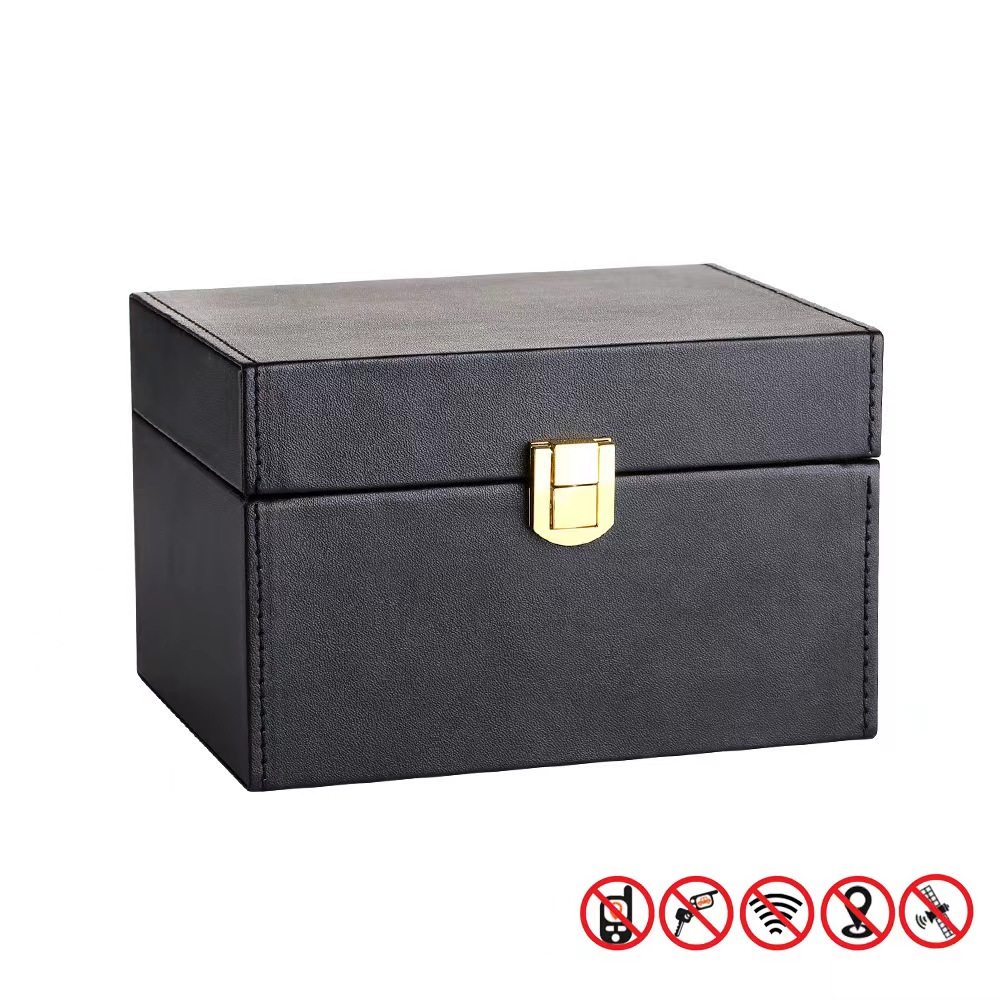
A Faraday car key box is designed to reduce radio-frequency communication involving a key fob stored inside its closed shielding enclosure. Before buying, selling or sourcing one, evaluate the selected box with the keys and vehicle systems relevant to the intended use.
A practical test helps answer two questions: does the key fit without obstructing the closure, and does the closed box prevent the expected keyless-entry response under the conditions checked? It does not establish universal compatibility or a laboratory shielding rating.
The Magicleaf Faraday car key box provides a starting model for product review. Confirm the usable dimensions, closure construction and applicable documentation for the configuration being quoted.
Vehicle keys differ in size, construction and communication system. A result obtained with one key and vehicle should not automatically be applied to every model in a retail range.
Testing also checks the enclosure in its actual loaded condition. A large key ring, several fobs or an incorrectly positioned accessory may interfere with the lid or closing arrangement.
A Faraday box is a signal-isolation product, not necessarily a lockable safe. Physical access control, tamper resistance and radio-frequency shielding are separate requirements.
Start by confirming that the chosen vehicle function works normally with the key outside the enclosure. This baseline makes the closed-box comparison meaningful.
The procedure below is intended for a vehicle with passive keyless entry. A remote-button locking function and passive entry are different functions and should not be treated as interchangeable tests.
With the key outside the box, confirm that the vehicle responds to the normal passive-entry action at the selected position. Follow the manufacturer's procedure for locking and resetting the vehicle between attempts.
If the vehicle does not respond normally at this stage, resolve that issue before drawing conclusions about the box.
Put the key fob fully inside the designated shielding area. Include the key ring or cover if those items will normally be stored with it, and check that nothing crosses or obstructs the closing boundary.
Close the lid or fastening completely according to the supplied instructions. Do not hold it partly open to reach a key button or route a strap through the opening.
With the key enclosed and other authorized keys kept away, attempt the same passive-entry action. Record whether the vehicle responds, keeping the test conditions as consistent as practical.
Take the key out of the box and repeat the normal operation. A normal response before and after the closed-box check helps distinguish the enclosure result from an unrelated key or vehicle problem.
If the box is intended for multiple fobs or a broad customer group, repeat the evaluation with representative devices and the proposed storage arrangement.
Entry and starting authorization are separate checks. If starting authorization is part of a formal evaluation, follow the vehicle's instructions and an appropriate safety procedure rather than assuming the entry result proves the starting result.
If passive entry works with the key outside the box, does not work with it correctly enclosed, and works again after removal, the result supports the intended isolation function for that key, vehicle and set of conditions.
It does not establish:
Buyers requiring quantified shielding performance should define a suitable laboratory test scope. Practical vehicle checks and laboratory measurements provide different types of evidence.
A response during the closed-box check needs investigation before the sample is approved. First review the setup, then assess the product.
If the expected isolation function is not demonstrated, do not describe the sample as approved. Request a construction review or further evaluation before relying on the product or authorizing a bulk order.
Ask for the usable storage space, not only the outside measurements. Confirm the number of keys the box can hold while closing normally.
Review alignment, overlap and the complete closing arrangement. A box that looks closed externally may still need a more detailed assessment of its shielding boundary.
Confirm whether any report concerns shielding fabric, a material specimen or the completed box. Material results should not be presented as a blanket guarantee for every finished enclosure.
For retail or corporate-gift projects, review the finish, logo position, color and packing. These appearance decisions should remain separate from functional acceptance criteria.
Clear instructions should explain where to place the key, how to close the box and how to check its function. Repeat checks after noticeable damage, closure problems or changes to the stored contents.
Public guidance from Police.uk on preventing keyless vehicle theft also recommends checking signal-blocking pouches periodically and using additional physical security measures.
Both formats require relevant functional evaluation. Choose between them according to storage location, carrying needs and the intended key quantity, not an assumed security ranking.
| Purchasing Factor | Faraday Car Key Box | Faraday Key Pouch |
|---|---|---|
| Storage Format | Rigid or semi-rigid enclosure | Flexible carrying format |
| Project Direction | Desk, shelf or another defined storage location | Portable key storage |
| Capacity Check | Usable box space and lid clearance | Usable pouch space and closure overlap |
| Construction Review | Lid, joints and shielding integration | Seams, lining and closing arrangement |
| Branding Review | Exterior finish, logo and presentation packing | Material, logo application and retail packing |
| Functional Evidence | Relevant evaluation of the selected box configuration | Relevant evaluation of the selected pouch configuration |
A sample result is more useful when it is connected to a documented production specification. Agree on what will be supplied and how the order will be checked.
If the construction changes after approval, confirm whether renewed evaluation is needed. Do not assume that a revised lid, lining or box size has the same performance as the original sample.
Compare normal passive-entry operation with the key outside and correctly enclosed inside the box. Confirm the outside-box response again after the test, and keep other authorized keys away.
Do not open the enclosure to press a button and treat that as a closed-box test. Passive entry and remote-button operation are different functions; evaluate the function relevant to the project using an appropriate procedure.
No. Record the key, vehicle, configuration and conditions actually evaluated. Additional models require relevant checks.
Capacity depends on the usable dimensions and complete closure. Evaluate the proposed arrangement rather than assuming a single-key result covers every loading condition.
No. Radio-frequency shielding and physical access control are separate properties. Confirm any lock or tamper-resistance requirement independently.
Magicleaf can review the proposed logo, finish, dimensions and packing requirements. Available options and structural changes require configuration-specific confirmation.
Magicleaf supports custom-order reviews for Faraday car key boxes and related shielding accessories. The P-11 car key box can be assessed against the intended key dimensions, storage arrangement and branding requirements.
Sample approval should distinguish appearance and fit from the agreed functional checks. Supporting documentation should be reviewed within its actual material or finished-product scope.
Include the following details when requesting a quotation or sample assessment:
MOQ, sample charges, development timing and delivery terms should be confirmed for the proposed configuration. Use the existing inquiry form to submit the project information.