Welcome to Hubei Magicleaf Technology Co., Ltd.
Mobile: +8618566295225
E-mail: tina@magicleafbags.com

Mobile: +8618566295225
E-mail: tina@magicleafbags.com
A Faraday backpack is a bag sewn with conductive shielding fabric that forms a mini “Faraday cage” around your devices, blocking incoming and outgoing radio signals such as Wi‑Fi, Bluetooth, cellular, GPS and many RFID signals. When properly closed, this shielded compartment dramatically reduces the risk of wireless hacking, tracking, and unauthorized data access.
The principle comes from the classic Faraday cage: an enclosure made of conductive material that redistributes external electromagnetic fields so they cannot penetrate the interior. Modern Faraday backpack manufacturers adapt this physics principle using flexible metallic textiles to create everyday bags that still look stylish and practical.
Customers searching for a Faraday backpack are usually worried about one of three issues: privacy, security, or resilience.
Privacy‑conscious users want to prevent location tracking of their phones and laptops, especially in high‑risk environments or during sensitive meetings.
Security‑focused professionals worry about wireless hacking, remote activation of microphones or cameras, or interception of authentication tokens and access cards.
Preparedness‑minded buyers want to reduce the risk of damage to electronics from strong electromagnetic events by adding an extra shielding layer.
Government and technical guidelines on RFID and wireless systems emphasize that shielding is one of the recognized controls to reduce unauthorized access and eavesdropping, which is exactly what a Faraday backpack does for mobile devices.
Effectiveness depends on shielding materials, design, and build quality. High‑quality Faraday backpacks use multi‑layer conductive fabrics (often copper‑nickel or silver‑plated fibers) that can reduce RF signals by 30–80 dB across common bands, enough to block most cellular, Wi‑Fi, GPS and RFID signals when the bag is fully closed. Devices inside effectively “disappear” from wireless networks, which is why similar Faraday pouches are used by law‑enforcement to preserve digital evidence on seized phones.
However, no consumer product offers perfect shielding, especially if there are gaps around zippers or if the fabric is damaged or worn; proper closure and good manufacturing are crucial.
RFID‑blocking wallets or sleeves usually target only low‑frequency RFID (around 125 kHz) and high‑frequency NFC (13.56 MHz) used in cards and passports.
A true Faraday backpack is designed to block a much wider spectrum, including mobile networks, Wi‑Fi, Bluetooth and GPS, by creating a full electromagnetic barrier around the device compartment.
RFID blockers are fine for contactless cards, but for full‑device protection and anti‑tracking, customers should seek a Faraday backpack manufacturer that publishes shielding test data across multiple frequency bands.
Authoritative RFID and security guidance notes that shielding methods such as Faraday cages protect tags and electronics by isolating them from external fields; they do not damage normal device operation. Studies on RFID‑blocking wallets similarly confirm that blocking materials do not harm the cards, because the shielding layer does not directly interfere with the chip itself. As long as the bag uses non‑abrasive lining and proper padding, a Faraday backpack is as safe as a standard laptop or travel backpack.
Customers often want to know how to distinguish a serious Faraday backpack company from a generic bag maker who just adds “RFID” in the product title. Important checkpoints include:
Published test reports: Look for shielding‑effectiveness (SE) values in decibels across cellular, Wi‑Fi, GPS and RFID frequencies, ideally tested by third‑party labs.
Material specifications: Reputable Faraday backpack manufacturers specify fabric composition (for example, copper‑nickel polyester mesh) and expected attenuation range.
Construction quality: Overlapping seams, shielded flaps over zippers, and double‑layer pockets reduce leakage gaps and significantly improve real‑life performance.
Experience in technical bags: Factories already producing RFID shielding wallets, Faraday pouches or technical outdoor packs tend to understand quality control for conductive textiles.
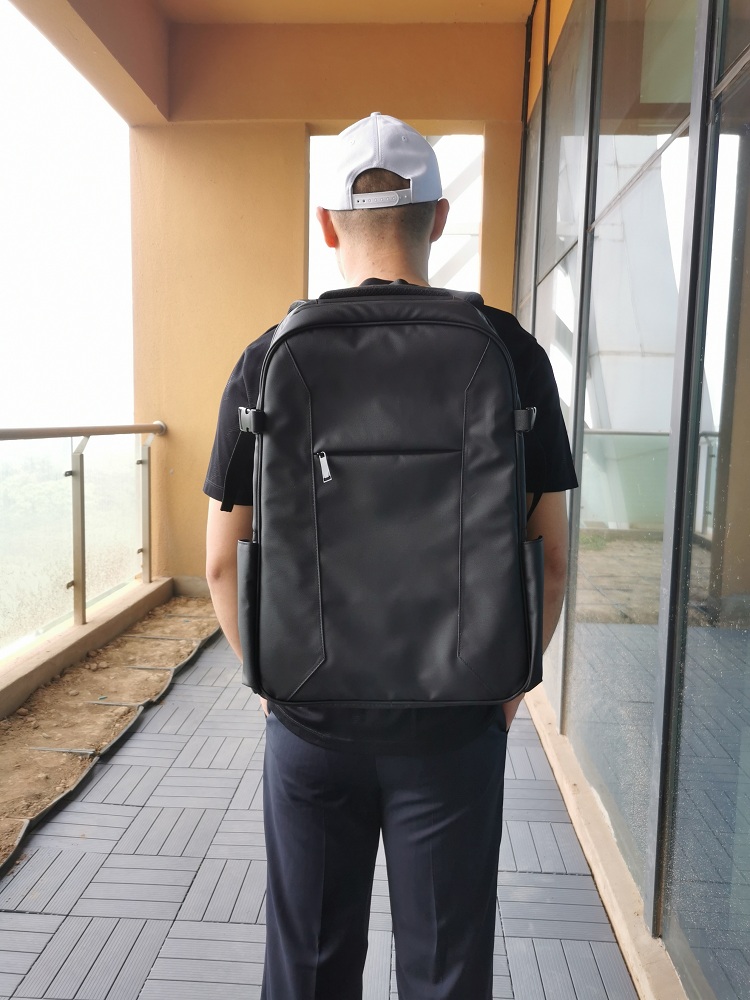
Buyers often fear that shielded bags are bulky or “tactical‑looking.” In practice, modern Faraday backpack factories combine shielding layers with standard padding, laptop sleeves, organizers and ergonomic shoulder straps. Fabric‑based Faraday solutions allow designers to keep the outside looking like a normal laptop or hiking backpack while hiding the shielding inside.
Place devices inside the dedicated shielded compartment or inner pouch, not just anywhere in the bag.
Ensure the pocket is fully closed—zippers all the way, roll‑top rolled down, or flap buttoned—because even small gaps can let signals leak.
Avoid sharp objects that could damage the shielding fabric, and follow care instructions; frequent folding or harsh washing can degrade performance over time.
| Feature / Concern | Ordinary Backpack | RFID‑Blocking Wallet/Bag | Faraday Backpack |
|---|---|---|---|
| Protection scope | None beyond physical padding | Mainly low‑frequency and high‑frequency RFID around 125 kHz–13.56 MHz (cards, passports) | Wide spectrum including cellular, Wi‑Fi, Bluetooth, GPS and RFID when properly closed |
| Typical use case | Carrying devices and books | Prevent card skimming and contactless payment theft | Prevent tracking, wireless hacking or remote activation of phones, laptops, keys and RFID cards |
| Shielding principle | No shielding | Conductive layer partially surrounding card area | Fully‑enclosed shielded compartment acting as mobile Faraday cage |
| Security level | Low | Moderate for payment cards | High for privacy‑sensitive devices; depends on materials and design |
| Who should choose | Everyday commuters | Travelers worried about card fraud | Journalists, executives, security teams, travelers in high‑risk regions, privacy‑conscious consumers |
A multinational company with sensitive R&D projects became concerned about the risk of targeted surveillance on executives’ smartphones and laptops during overseas travel. Public guidance from security agencies and technical bodies highlights that RFID and wireless systems can be vulnerable to eavesdropping, cloning and unauthorized tracking if not properly protected.
The company worked with a Faraday backpack factory in China to design a custom pack featuring: a dedicated Faraday laptop sleeve, a shielded phone pocket, and separate non‑shielded compartments for everyday items. The Faraday backpack manufacturer provided third‑party test reports showing 60–80 dB attenuation across cellular and Wi‑Fi bands, which aligns with recommendations for blocking higher‑frequency signals. After deployment, the security team reported that executives’ devices could be completely cut off from wireless networks during sensitive meetings or travel segments simply by placing them in the shielded sections and fully closing the zippers.
When you evaluate any Faraday backpack company, consider the following:
Engineering and testing capability: Does the manufacturer understand RF shielding standards and provide attenuation test data across GSM, LTE, 5G, Wi‑Fi, GPS and RFID bands?
Customization experience: Can the Faraday backpack factory integrate shielding into laptop bags, hiking backpacks, or waterproof/fireproof bags to meet your exact use case?
Production scale and quality: Facilities with specialized sewing lines, skilled workers and consistent QC are more likely to maintain the tight tolerances Faraday designs require.
Academic and governmental guidance on RFID and wireless security stress that technical controls like shielding must be combined with sound policies and usage practices. A good Faraday backpack manufacturer will therefore also help educate clients on correct use—such as fully closing shielded pockets and avoiding damage to the conductive fabric—to ensure the product delivers the expected level of protection.
For buyers looking for a reliable Faraday backpack manufacturer in China, Magicleaf Technology stands out as a strong partner for OEM and private label projects. With more than 3,000 square meters of factory space, around 50 experienced workers, and 100 sewing machines dedicated to custom technical bags, the company combines production capacity with practical craftsmanship. Its portfolio of RFID shielding wallets, key pouches, laptop bags, waterproof and fireproof bags, and outdoor backpacks shows real experience with durable bag construction and protective materials.
Hubei Magicleaf Technology Co., Ltd. is well positioned as a Faraday backpack factory for global clients that need both RF shielding and reliable outdoor or travel performance. The team already works with RFID shielding products, conductive fabrics, and multi-layer construction, which are all essential for precision sewing around shielded compartments. Magicleaf also exports mainly to the USA, Japan, and Germany, and replies to customer inquiries within 12 hours, making it a responsive and globally oriented Faraday backpack supplier for brands, distributors, and corporate buyers.
Source: